

Track fiber intake with a dedicated fiber tracker or food-diary app that pulls from a verified database, log every meal by search, barcode, or photo, and aim for roughly 30 grams daily as a practical target (25g for women, 38g for men, per common USDA-based guidance). A quick daily loop, set the goal, log meals, check what's left, works better than guessing. Apps like Hero AI automate that loop with AI photo logging so the tracking itself takes seconds.
TL;DR:
- Most Americans consume only 10 to 15 grams of fiber daily, less than half of the 25 to 30 grams recommended for optimal health.
- Tracking fiber intake reveals both the shortfall and which fiber type—soluble or insoluble—is lacking, aiding digestion troubleshooting.
- Incrementally increasing fiber by about 5 grams per day over two weeks, combined with more water, minimizes digestive discomfort and promotes sustainability.
- Automated photo recognition apps like Hero AI significantly reduce logging time, making consistent fiber tracking feasible without effort.
- Adjust your fiber goals if you have digestive conditions, allergies, or sensitivities, focusing on soluble sources and avoiding aggravating high-FODMAP foods.
Table of Contents
- Why Tracking Fiber Matters for Digestion and Long-Term Health
- How Much Fiber Should You Actually Aim For?
- Apps, Calculators, and Manual Logging: What Actually Works
- Log Fiber in Under 60 Seconds Per Meal
- Practical Tips to Reach Your Fiber Goal Without Digestive Distress
- Hero AI: An AI-Powered Way to Simplify Accurate Fiber Logging
- Adjusting Fiber Intake for IBS, Allergies, and Other Conditions
- Resources and Reliable Tools to Track Fiber
- What This Article's Research Actually Points To
- Track Fiber Automatically With Hero AI
- Sources
Why Tracking Fiber Matters for Digestion and Long-Term Health
Fiber does more than keep you regular. It feeds the bacteria in your gut, and a more diverse microbiome is linked to better metabolic health. Harvard's Nutrition Source ties adequate fiber intake to lower rates of heart disease and type 2 diabetes, largely because soluble fiber slows how fast sugar and cholesterol get absorbed into the bloodstream.
The problem is nobody eyeballs fiber accurately. You can guess your protein intake within a few grams by looking at a chicken breast. Fiber hides inside foods you'd never suspect, oatmeal, black beans, raspberries, and you have no visual reference for grams.
That's where the gap becomes obvious once you start logging.
Most Americans eat somewhere around 10 to 15 grams of fiber a day, less than half the practical 30-gram target most guidance points to.
Tracking exposes that shortfall in a way memory never will, and it also shows you which type of fiber you're missing, soluble or insoluble, which matters more than the total number once you're troubleshooting digestive issues.
How Much Fiber Should You Actually Aim For?
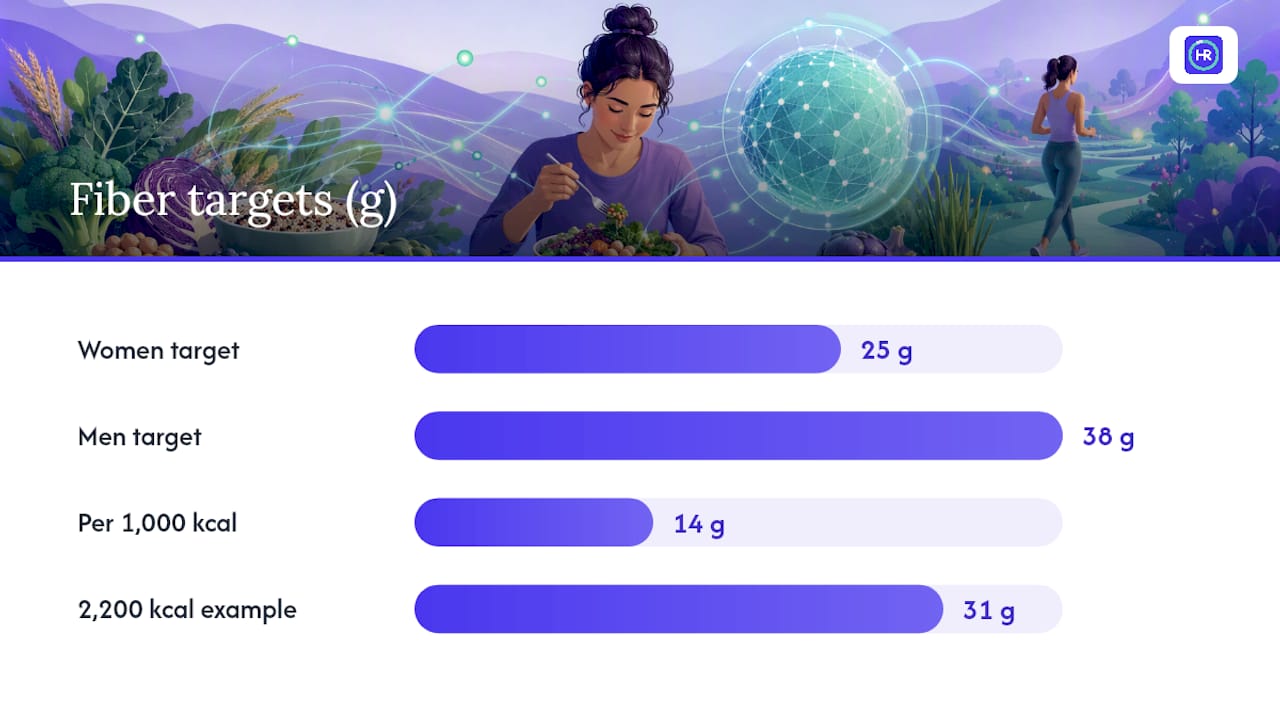
The number that shows up most often in nutrition guidance is 25 to 30 grams a day for adults, with a slightly more granular split of 25g for women and 38g for men. A more personalized rule ties fiber to calories: about 14 grams per 1,000 calories consumed, which means someone eating 2,200 calories a day should land closer to 31 grams.
If you're currently eating 12 grams a day, don't jump straight to 30. Your gut needs time to adjust, and a sudden jump usually means bloating and discomfort within 48 hours.
A simple way to hit your number without obsessing over it is to spread the target across meals:
- Breakfast: 7 to 10 grams (oatmeal, berries, chia seeds)
- Lunch: 8 to 12 grams (beans, whole grains, leafy greens)
- Dinner: 8 to 12 grams (lentils, vegetables, whole wheat pasta)
- Snacks: fill whatever gap remains (an apple, almonds, popcorn)
That distribution alone usually gets you within striking distance of 30 grams without any single meal feeling like a fiber overload.
Apps, Calculators, and Manual Logging: What Actually Works
Not every tracking method gives you the same accuracy, and the differences matter more than people expect.
- Dedicated fiber trackers pull from USDA FoodData Central, which means the fiber values you see are lab-tested rather than crowdsourced. Many also display progress rings and streaks that make the habit stick because you can see a week of consistency at a glance.
- General food-diary apps often track a wider range of nutrients, useful if you also care about protein or sodium, but some rely on user-submitted entries. A homemade "chili" logged by three different users can carry three different fiber counts.
- Calculators and spreadsheets work fine for occasional spot checks, especially for packaged foods where you're reading the Nutrition Facts label directly.
- Manual label reading is the slowest method but the most reliable for single, labeled items, since you're pulling the number straight from the source.
One caution worth flagging here: some apps and product labels push "net carbs" (total carbs minus fiber) as a cleaner number for carb counting. The American Diabetes Association points out that net carbs isn't a standardized measurement, and subtracting fiber this way can give an inconsistent picture of how a food actually affects blood sugar. If you're tracking fiber for its own sake, look at total carbs and fiber grams separately rather than trusting a net-carb figure someone else calculated for you.
Log Fiber in Under 60 Seconds Per Meal
You don't need a ten-minute ritual after every meal. A tight workflow keeps fiber tracking from becoming another chore you abandon by week two.
- Set your daily target once, based on your calorie intake or the standard 25 to 38 gram range, and let the app carry that number forward every day.
- Log the meal immediately using whichever method is fastest for that food, search for a fresh ingredient, scan a barcode on packaged food, or snap a photo if the app supports AI recognition.
- Check your remaining allowance right after logging. If breakfast used 6 grams of a 30-gram goal, you know you have 24 left to distribute across the rest of the day.
- Choose your next food with that number in mind. Behind on fiber by mid-afternoon? Grab an apple or a handful of almonds instead of a bag of chips.
- Review your weekly average on Sunday or Monday. A single high-fiber day doesn't matter much; a week that averages 18 grams tells you where your meal planning needs work.
Favorites lists and recent-food shortcuts cut logging time dramatically once you've built a routine, since most people rotate through the same 15 to 20 meals anyway. Barcode scanning handles packaged goods in about two seconds, and a saved preset for "one cup cooked lentils" means you're not re-searching the same food every Tuesday.
Pro Tip: Pin fiber as a visible nutrient on your tracker's main dashboard instead of burying it inside a detailed nutrient breakdown. If you have to tap through three menus to see your fiber count, you'll stop checking it within a week.
Practical Tips to Reach Your Fiber Goal Without Digestive Distress
Ramping up fiber too fast is the single most common reason people quit. Add roughly 5 grams a day, then hold there for a few days before increasing further, giving your gut one to two weeks to adjust to a higher total. Pair every increase with more water, since fiber needs fluid to move through your system smoothly; without it you're more likely to end up constipated rather than less.
Variety matters as much as quantity. Different fibers feed different bacteria, so rotating sources beats eating the same high-fiber cereal daily. A few reliable options, per Harvard's fiber sourcing:
- Lentils: about 8 grams per half-cup cooked
- Raspberries: about 8 grams per cup
- Chia seeds: about 10 grams per ounce
- Whole wheat pasta: about 6 grams per cup cooked
- Avocado: about 10 grams per whole fruit
Food-first is generally the better approach since whole foods deliver fiber alongside vitamins, minerals, and water your body uses in the digestion process. Supplements like psyllium husk have a place if you're consistently falling short, but they shouldn't be the default fix for a diet that's just low in produce and legumes. If you have an existing digestive condition, check with a clinician before making a significant jump in fiber, supplement or otherwise — consider consulting resources on nutritional therapy for guidance.
Hero AI: An AI-Powered Way to Simplify Accurate Fiber Logging
Manual logging fails most people not because they lack discipline, but because searching a database for "black beans, canned, drained" after every meal gets old fast. Some apps remove that friction with photo-based logging: snap a picture of your plate, and the app identifies the food and pulls fiber alongside calories and macros from a large verified food database. Barcode and nutrition label scanning cover packaged items in seconds.
The daily workflow, set a target, log the meal, check what's left, only works long term if logging itself takes almost no effort. That's the specific problem AI photo recognition is built to solve.
Combined with a personalized nutrition plan based on your body metrics and goals, fiber tracking becomes one more number the app already has, not a separate task bolted onto your day.
Adjusting Fiber Intake for IBS, Allergies, and Other Conditions
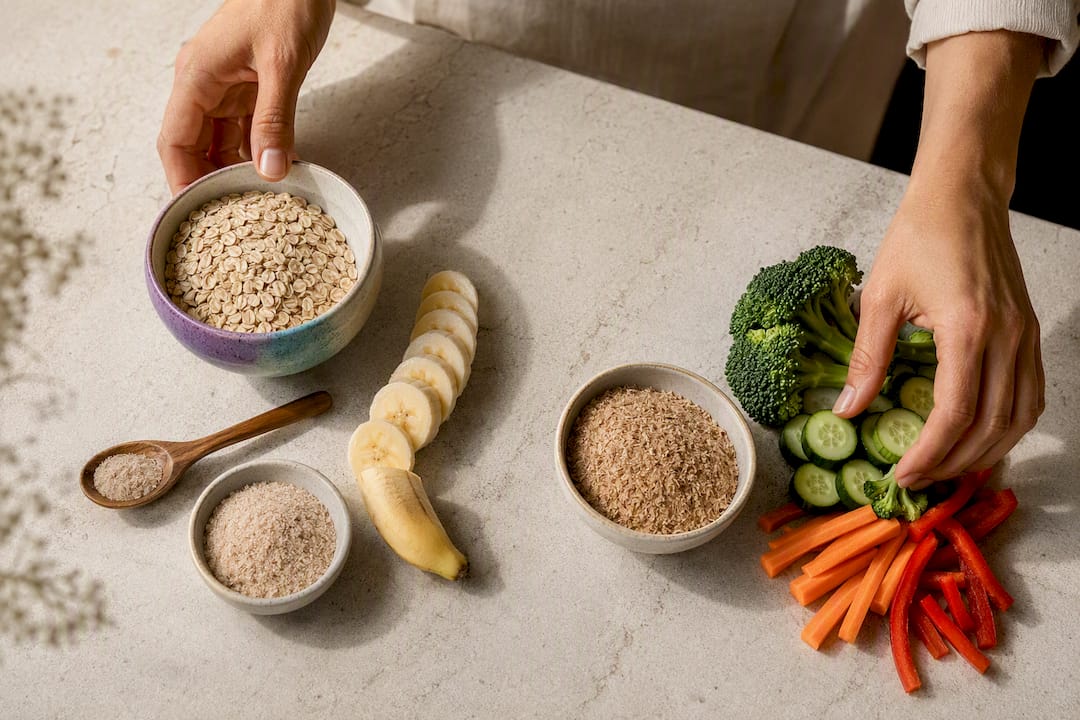
Standard fiber targets assume a typical digestive system, and plenty of people don't have one. If you have IBS, fiber isn't a single lever, it's two different ones. Soluble fiber, found in oats, bananas, and psyllium, tends to ease IBS symptoms by softening stool and slowing transit. Insoluble fiber, found in wheat bran and many raw vegetables, can aggravate bloating and cramping for some people with IBS, particularly during flare-ups. Tracking which type you're eating, not just the total gram count, becomes far more useful once digestive sensitivity is part of the picture.
People following a low-FODMAP diet for IBS management need to watch specific high-fiber foods that also happen to be high-FODMAP, like apples, onions, and certain legumes, even though those same foods are excellent fiber sources for someone without IBS. This is a case where the "just eat more legumes" advice that works for the general population can backfire.
Food allergies add another layer. Someone with a legume allergy loses one of the densest fiber sources available and needs to lean harder on whole grains, seeds, and low-allergen vegetables to hit the same numeric target. Celiac disease similarly narrows the whole-grain options to gluten-free varieties like quinoa, brown rice, and certified gluten-free oats.
None of this means abandoning a fiber target. It means the target might need to shift lower temporarily, or the sourcing needs to shift toward soluble-heavy foods, and a tracker that shows soluble versus insoluble breakdown makes that adjustment far easier than guessing.
Resources and Reliable Tools to Track Fiber
- USDA FoodData Central and FiberGoal's daily calculator for verified fiber values and target-setting
- Harvard's Nutrition Source for evidence on fiber's health benefits
- The ADA's carb guidance for the net-carbs caveat
- Hero AI for automated, photo-based fiber and macro tracking
What This Article's Research Actually Points To
The conventional fiber advice to eat more whole grains and count to 25 has always been technically correct and practically useless. Nobody sustains a habit built on vague encouragement. What the evidence actually supports is more specific: fiber tracking only works when logging takes seconds, when the target is broken into meal-sized chunks, and when the tracker distinguishes soluble from insoluble instead of flattening everything into one number.
The overrated piece of advice is "just eat more fiber." That guidance ignores the two most common failure points, ramping up too fast and picking the wrong fiber type for a sensitive gut, and it treats fiber like a single dial when it's really two dials moving independently.
If you take one thing from this, prioritize the daily workflow over the target number. A person who logs consistently at 22 grams a day will out-perform someone who aims for 35 grams but tracks sporadically. Accuracy compounds; good intentions don't.
— Elena
Track Fiber Automatically With Hero AI
The methods above work, but they all cost you time: searching databases, reading labels, remembering to log before you forget what you ate. Certain apps cut that step out entirely. Snap a photo of your meal and the app identifies it against a large verified food database, logging fiber alongside calories, protein, and other macros quickly rather than slowly.
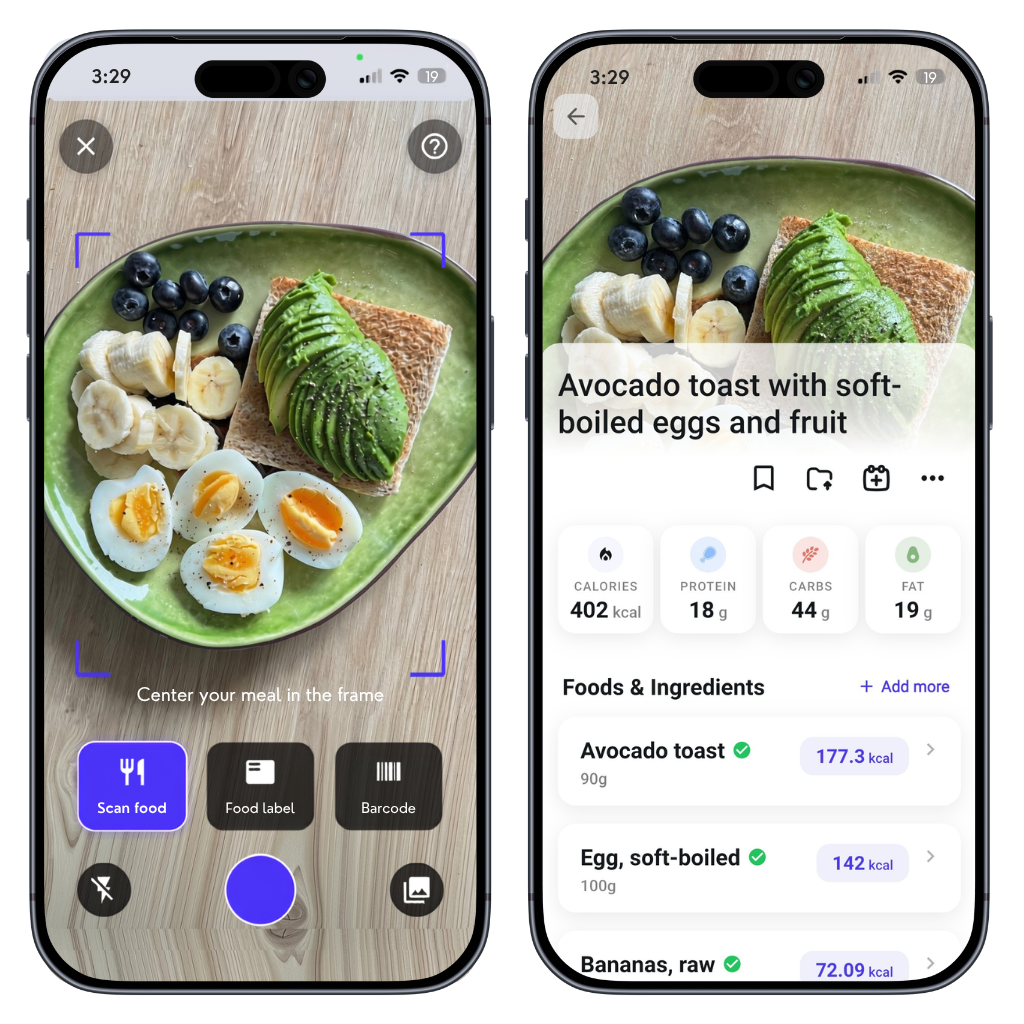
That speed matters because the biggest reason fiber tracking fails isn't lack of motivation, it's logging friction that makes people quit by day ten. Some apps also build personalized plans around your body metrics and goals, so your fiber target isn't a generic number pulled from a chart, it can be calculated specifically for you. Barcode scanning and nutrition label capture handle packaged foods just as fast. If you're ready to see your actual fiber numbers instead of guessing, start tracking with Hero AI and check your first week's average against the 25 to 30 gram target.
Sources
- Get to Know Carbs | ADA
- Fiber | Harvard T.H. Chan School of Public Health
- How Much Fiber Did I Eat Today? — Daily Fiber Calculator | FiberGoal