

Can one app keep nutrition and training records connected for a full year, even as goals and routines change? A full year diet and training tracker app can bring both into one workflow. Consistency depends on whether logging stays manageable and the records remain useful over time.
Switching between separate food and workout logs can make progress harder to review. Manual entry can also make routine tracking difficult to sustain. The goal isn’t to follow the same plan for twelve months. It’s to keep a useful record and adjust what you track as your circumstances change.
This article explains how to evaluate a tracker for year-long use, choose records that support meaningful reviews, and adapt logging when your routine shifts. It also covers how Hero AI’s one-year subscription brings nutrition and training tracking into a shared workflow. Photo and barcode meal logging, recipe imports from social media, and workout scheduling from social content can reduce repeated entry. You’ll learn how to use these tools while keeping records you can compare over time.
Key Takeaways
- Treat a year-long tracker as a continuous record, not a fixed diet or workout plan.
- Use a simple daily sequence to review nutrition and training entries together.
- Compare a full year diet and training tracker app by entry options, workout planning, record continuity, and review tools.
- Set a baseline, log consistently, review periodically, and update records when your routine changes.
- Choose records that make it easier to spot patterns across changing goals without adding unnecessary steps.
Why use a full-year diet and training tracker app?
A full-year diet and training tracker app keeps nutrition and workout records in one ongoing timeline, making it easier to review how your routines change. It provides a consistent record, not a fixed diet or workout prescription. Missed entries don’t erase the value of what you have logged. Continuity comes from tracking often enough to make later comparisons useful.
What changes when tracking spans a full year?
A year can bring changes in work demands, travel, food preferences, available equipment, and training schedules. A routine that works during one period may not suit another. Rather than treating every variation as a setback, note when your routine changes. That context helps you understand what your records describe during different periods.
For example, compare meal entries and workouts from a period of regular training with records from a period when your schedule was different. Your log may reveal patterns, but it can’t show that one change caused another. Tracking supports personal review; it doesn’t guarantee weight, fitness, or health outcomes.
Continuity doesn’t require a perfect daily log. A missed meal entry or workout leaves a gap, but it doesn’t make the rest of the record useless. Resume logging when practical. If you remember when your routine changed, note the period instead of filling gaps with guesses. Accurate records are more useful than entries that look complete but may be wrong.
An Activity tracker can record activity-related data, but a year-long review also depends on how nutrition and training notes are organized. Keeping both in a shared routine makes it easier to consider them together without assuming that one explains the other.
Which records belong in one tracking routine?
Keep nutrition and training as distinct record types. Nutrition entries capture the meals you choose to log. Workout records can show sessions you plan or complete. Their shared purpose is to give you material for a routine review, not to prove that a food choice produced a training result.
Choose what to record using three practical criteria:
- Consistency: Can you use the same basic logging approach as your schedule changes?
- Usability: Can you add information without making the process too burdensome to maintain?
- Reviewability: Can you find records from different periods and understand the routine they describe?
These criteria keep your log focused. Include enough context to understand entries later, such as whether a workout was planned or completed, but skip fields you won’t use in a review. HERO AI’s one-year subscription overview describes its shared nutrition and training tracking workflow. A year-long record is most useful when it remains readable as your habits and schedule evolve.
How a diet and training tracker app connects daily logs
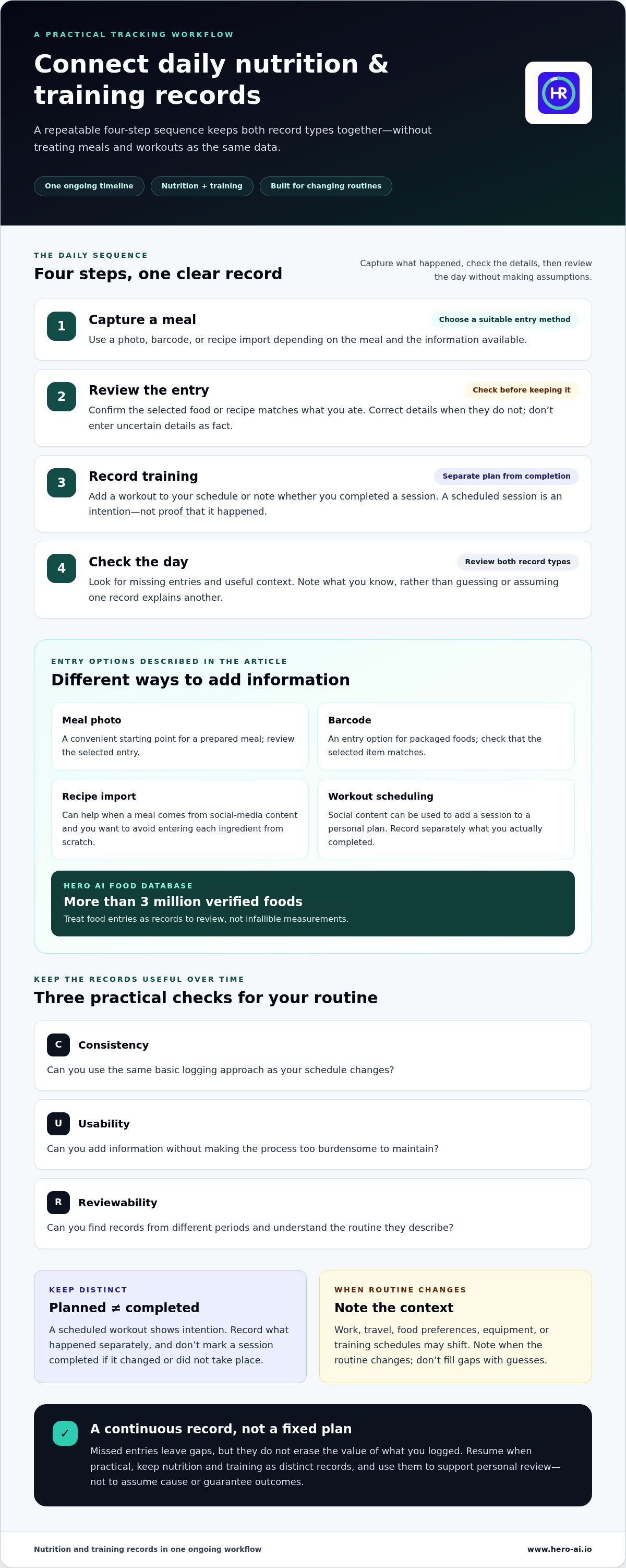
A useful daily workflow connects records without treating food entries and workouts as the same kind of data. Capture a meal, review the entry, note your training, then check the day’s records. This repeatable sequence helps keep nutrition and activity in one place. A full year diet and training tracker app can make routine reviews easier when its daily steps are practical enough to repeat.
- Capture a meal. Choose an entry method that suits the food and the information you have.
- Review the entry. Check that the selected food or recipe reflects what you ate, and correct details if needed.
- Record training. Add a workout to your schedule or note whether you completed a session.
- Check the day. Review nutrition and training records together, noting gaps or relevant context rather than making assumptions.
HERO AI supports photo and barcode meal logging, imported social-media recipes, and workout scheduling from social content. These options provide different ways to add information to your routine, but it’s still useful to review what was entered. For more detail on how meal entries relate to nutrition records, see AI calorie tracking and automated nutrition records.
How to log nutrition without making the routine cumbersome
Photo capture can be a convenient starting point for a prepared meal. Barcode entry can suit packaged foods, while recipe import can help when a meal comes from social-media content and you want to avoid entering each ingredient from scratch. HERO AI also provides a database of more than 3 million verified foods. Treat entries as records to review, not infallible measurements. Check that the selected item matches your meal and adjust the entry when it doesn’t.
How to include workouts in the same tracking system
Scheduling a workout from social content can add a session to your personal plan. A scheduled session represents an intention, not a completed workout. Keep the distinction clear in your own records: note what you planned, then record what happened. If the session changes or doesn’t take place, don’t treat it as completed. Scheduling helps organize a routine; it doesn’t imply automatic coaching, performance analysis, medical review, or individual tailoring.
At the end of the day, a brief review can help you spot missing entries and clarify whether a workout was planned or completed. Keep corrections specific. If you’re unsure about a detail, don’t record it as fact. Clear entries are easier to interpret later and help prevent a schedule from being confused with actual activity.
HERO AI brings meal-entry and workout-scheduling options into one tracking workflow. Its nutrition and training tracker combines these tools in one place.
How to compare full-year diet and training tracker apps
Evaluate an app by how well its records support regular use over time, not just by how many features it offers at the start. A full year diet and training tracker app should make it practical to log nutrition and workouts, revisit records, and understand entries when your routine changes. Use the questions below to compare how each tool fits your needs.
| Criterion | Why it matters across a year | Question to consider |
|---|---|---|
| Nutrition entry options | Different days may call for different ways to record food. More than one usable entry route can reduce repetitive steps. | Can I log food in a way that fits both structured meals and less planned days? |
| Workout planning | Your schedule may change as your available time, preferences, or training routine shifts. | Can I record planned sessions clearly, then review them separately from completed activity? |
| Record continuity | Records are more useful when they remain organized through routine changes and gaps in logging. | Can I understand which period or routine an entry belongs to? |
| Reviewability | Nutrition and training records should be easy to revisit without treating one as proof of the other. | Can I review each record type and consider them together without assuming cause and effect? |
Which app criteria matter beyond the first few weeks?
Consider how logging would fit on both a structured day and a busy one. Check whether meal-entry options suit your usual habits and whether workout planning can accommodate schedule changes. The aim isn’t to fill every field daily. It’s to maintain a routine you can return to and review across different periods.
How to assess flexibility and record quality
Flexibility means you can update your own goals or routine and keep records that reflect those changes. It doesn’t mean an app automatically adapts a plan. Check whether entries are clear and can be corrected when details are wrong. For a closer look at how nutrition records can include macronutrient information, review this guide to macro tracking app functions.
A subscription’s usefulness also depends on whether its workflow remains relevant as your priorities shift. HERO AI’s one-year subscription combines nutrition and training tracking, with meal-entry options and workout scheduling from social content. Compare those functions with the criteria above, then consider whether they fit the way you plan to maintain and review your records.
How to maintain a year-long diet and training tracking routine
A tracking routine should make records easier to maintain and review. It isn’t a prescribed nutrition or training program. Use these four steps to build a process that can continue as your schedule and priorities change:
- Set a baseline. Record the nutrition and training details you want to review. Note the routine or schedule they reflect so future comparisons have context.
- Log consistently. Choose a manageable way to add entries. Focus on creating a useful record, not filling every field or maintaining a perfect streak.
- Review periodically. Choose a repeatable time to look over your records. Compare similar periods and note changes in schedule or routine before interpreting patterns.
- Adjust the record when routines change. Update what you track to reflect your current priorities. Keep earlier records intact so the timeline remains understandable.
This process helps a full year diet and training tracker app stay useful as your routine evolves. The tracker holds the records; you decide what to review and how to interpret them.
How to review records as goals and schedules change
Where possible, compare periods with similar routines. If your work schedule or training plan changed between periods, note that before reviewing the entries. This context can help explain why records differ, but it doesn’t prove that one factor caused a change. If your priorities shift, update your tracking focus instead of collecting details you no longer use.
Keep your review centered on the record. Look for differences and recurring patterns, then decide whether they matter to your personal tracking goals. Don’t treat app entries as a reason to set nutrition targets, change exercise frequency, or make medical decisions.
What to do after missed days or an interrupted routine
Restart with the next entry you can make accurately. Don’t estimate meals or sessions from memory just to fill gaps. If you know when your routine changed, record that context separately from details you can’t verify. A gap is a recordkeeping issue, not proof that your tracking has failed.
Keep the restart simple. Resume a logging method you can maintain, then review the record once you have enough new entries to make it useful. A perfect streak isn’t required for a long-term record to provide context. HERO AI’s one-year subscription brings nutrition and training tracking into a shared workflow for ongoing use.
A routine that fits your changing schedule is easier to return to. HERO AI’s tracking features bring nutrition and training records into one workflow.
How HERO AI supports a full-year diet and training tracking workflow
HERO AI brings nutrition and training records into one tracking workflow. Its features include meal logging by photo or barcode, access to a database of more than 3 million verified foods, social-media recipe imports, and workout scheduling from social content. These options cover practical comparison criteria: ways to enter food, a food reference database, and a method for organizing workout plans.
HERO AI offers a one-year subscription for access to these tracking tools. The subscription period provides a framework for keeping records over time, while you decide which entries to make and how to use them as routines or goals change. A full year diet and training tracker app can support continuity, but the value of its records depends on how well they fit your review process.
How the stated features fit into a year-long routine
Photo, barcode, and recipe-import options provide different ways to add meal records. The food database offers a reference during logging. Workout scheduling from social content can help organize sessions in a personal plan and distinguish planned activity from completed activity in your own review. These functions support logging and organization; they don’t determine which goals you should set.
For example, if your schedule changes, you can keep using the same tracking workflow while adjusting which meals or sessions you record. Consider whether the available options remain practical and whether the entries are clear enough to review later. You decide how to apply the records to your priorities. A database description doesn’t guarantee that every entry will match a specific meal or be error-free, so review remains part of responsible tracking.
What to expect from a tracking tool, and what it cannot promise
HERO AI is a tool for recording nutrition and organizing training. It isn’t a substitute for qualified health advice. App use alone can’t guarantee weight loss, muscle gain, or changes in health. The platform’s stated functions describe tracking options, not guaranteed outcomes, automatic changes to a user’s plan, or professional recommendations.
This distinction matters when reviewing records. An entry can document what you logged or planned, but it doesn’t establish why a personal outcome occurred. Use the information to support personal review, and seek qualified guidance for health decisions that require it. The tracker’s role is to maintain records, not diagnose, prescribe, or promise results.
A combined workflow may suit people who want nutrition and training records in one place, with multiple meal-entry options and workout scheduling. It can also support people who want to maintain a record while their routines shift, provided they review entries and interpret them in context. Compare these features with the tracking criteria that matter to your routine.
Explore HERO AI to see its nutrition and training tracking workflow.
Set a tracking routine you can return to
Start by defining what a useful record means to you. Choose a small set of details you want to revisit, then decide when you’ll review them. This gives your tracking routine a clear purpose without requiring every day to look the same. A full year diet and training tracker app is most useful when its records help you understand changing habits, not when it demands perfect entries.
Keep your review flexible. If your priorities shift, adjust what you pay attention to and continue with your current routine. Gaps don’t prevent you from building a record over time. Focus on entries you can use, and let your process develop as your schedule changes.
HERO AI offers a shared approach to nutrition and training tracking through a one-year subscription. Its meal logging and workout scheduling tools bring these records into one workflow.
Explore HERO AI’s diet and training tracking features and start building a manageable routine, one entry at a time.
Frequently Asked Questions
Is a full-year diet and training tracker app suitable for beginners?
Yes. Beginners can start with a small amount of information, such as meal names and whether a planned workout took place. Add detail only when it helps answer a question about your routine. For example, if you want to compare meal patterns on active and rest days, record that context consistently. A simple setup can make an app easier to use and review.
Can I change my goals during a year-long tracking period?
Yes. Your tracking focus can change as your priorities develop. You might first record regular meals, then pay closer attention to how often you complete planned sessions. Keep older entries as historical records and note when your focus changed. That helps prevent a later review from treating different tracking priorities as if they were measured in the same way.
What should I do if I miss several days of tracking?
Resume with information you can record accurately now. Don’t reconstruct several days from memory if you’re unsure what happened. If helpful, note that tracking paused during that period, then continue with the next meal or session you can document. This keeps uncertain estimates out of your records. You can still review earlier and later periods without treating the gap as a verdict on your routine.
Can one app track both diet and workouts?
Yes, a combined tracker can keep nutrition and workout records in one workflow while preserving them as separate types of information. HERO AI supports nutrition tracking and workout scheduling. For a clear review, distinguish a scheduled workout from one you completed, and associate meal entries with the relevant day. This organization helps you find records without assuming that one entry explains another.
Does a tracking app replace advice from a nutrition or fitness professional?
No. A tracker stores information for personal review, but it doesn’t replace qualified professional advice. A food entry can document what you logged, for example, but it can’t assess your individual health needs. Likewise, a scheduled workout doesn’t determine whether a particular activity is appropriate for you. Use professional guidance for decisions that require personalized nutrition, exercise, or health expertise.
Can I use a diet and training tracker if my routine changes often?
Yes. A full year diet and training tracker app can still be useful when your schedule varies, provided you record changes in a way that makes later entries understandable. For example, distinguish a period with limited equipment from one with access to your usual setup. You can also update which details you track as your circumstances change instead of forcing every period into the same routine.
How do I know whether a full-year tracker is still useful?
Check whether your records help answer a practical question. Can you identify which sessions were completed during a particular schedule, or find meal records from a period you want to review? If entries are hard to interpret, simplify what you record or clarify labels. A tracker remains useful when its information supports your reviews without creating more logging work than you can sustain.


