

You don’t need to weigh and measure every meal forever, but doing so at first can help you learn portion sizes and the macronutrient content of foods. Weighing ingredients in grams can make macro calculations more precise, while an IIFYM meal logging platform can help you record meals as you build the habit.
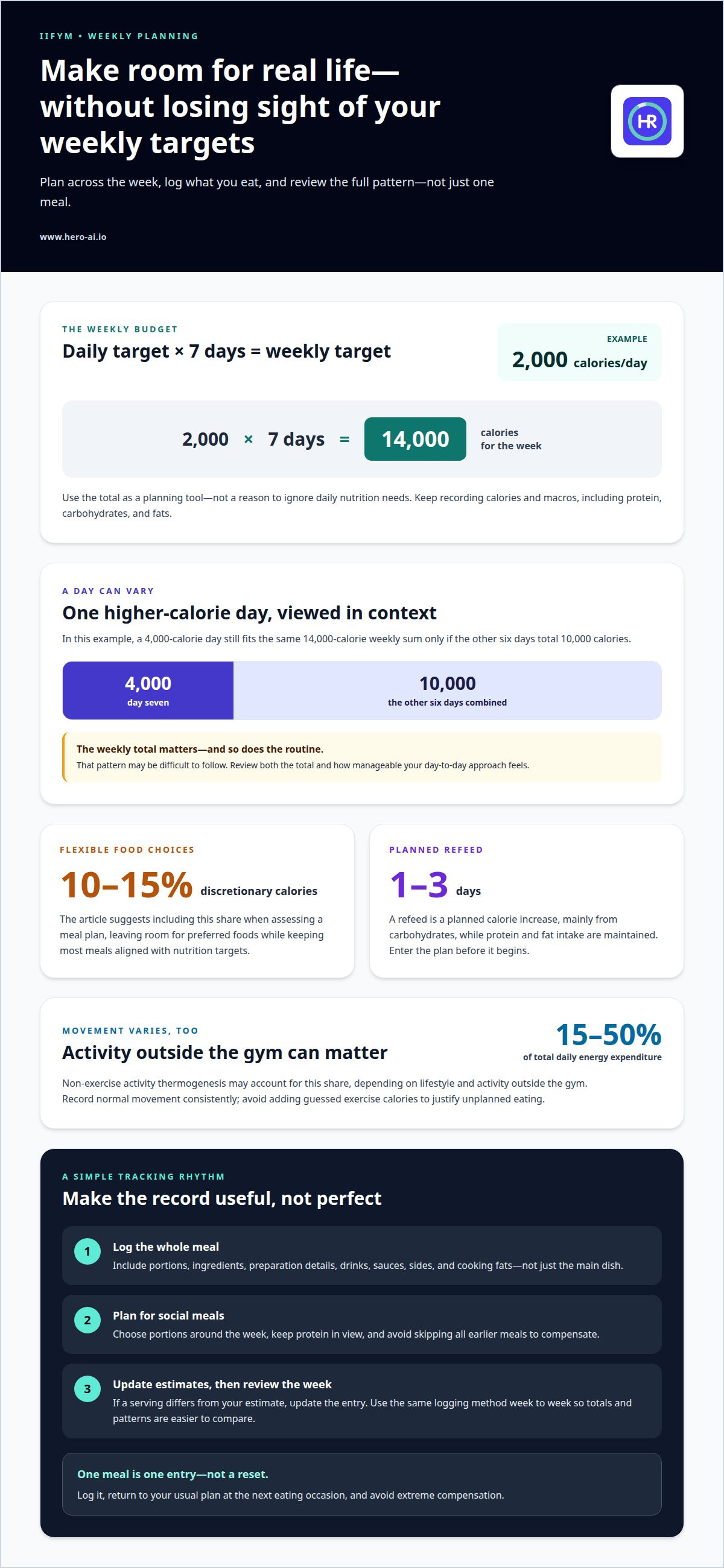
Tracking can feel restrictive, especially when meals happen away from home. IIFYM gives you a way to plan around calorie and macro targets while keeping food choices flexible. For example, a daily target of 2,000 calories equals a weekly target of 14,000 calories.
This article explains how to log meals, account for often-overlooked calories, and set weekly targets for weight loss or gain. It also covers adapting your tracking to social plans, using food measurements effectively, and reviewing progress without treating one meal as the whole picture.
Key Takeaways
- Log meals consistently, including drinks, sauces, cooking fats, and small snacks that can be easy to overlook.
- Plan for social meals by adjusting food choices across the week instead of treating one meal as a failure.
- Set calorie and macro targets to match your goal, then review progress before making changes.
- Use the same logging method for meals and recipes to make your records easier to compare over time.
- Check which fitness and health apps can share data with your logging tool, and avoid counting the same activity twice.
Weekly calorie targets and cheat meals
- Calculate a weekly calorie budget. Multiply your daily calorie target by seven to see the full week’s allowance. For example, a 2,000-calorie daily target equals 14,000 calories over seven days. Treat this total as a planning tool, not permission to ignore daily nutrition needs. Your IIFYM targets still include protein, carbohydrates, and fats, so record both calories and macros.
- Choose a consistent tracking method. Log food as you eat, or record meals shortly afterward. Include portions, ingredients, and preparation details. A restaurant meal with dressing, oil, and a drink contains more than the main dish alone, so log those items instead of relying on memory at the end of the week. Consistent entries make weekly totals more useful.
- Distribute calories around your schedule. If you have a social meal planned for Saturday, decide in advance how it fits into your week. You can leave more calories for it by choosing different portions at other meals. Keep your protein target in view, and avoid skipping all earlier meals to compensate. Aim for planned flexibility, not a cycle of restriction and overeating.
- Set a limit for discretionary foods. Include 10-15% discretionary calories when assessing a meal plan. This creates room for foods chosen for preference, such as dessert or pizza, while keeping most meals aligned with your nutrition targets. Log the portion you expect to eat. If the actual serving changes, update the entry instead of treating the estimate as exact.
- Review the full week before making changes. A higher-calorie day can fit within a weekly budget, but the weekly total still matters. In one example, a rigid dieter consuming 2,000 calories daily eats 14,000 calories over seven days. If that person consumes 4,000 calories on day seven, the other six days must total 10,000 calories to keep the same weekly sum. That pattern may be difficult to follow, so assess both totals and routine.
- Do not treat a “cheat meal” as a reset. A pizza meal does not mean you burned an extra 3,500 calories in 24 hours. Log the meal, return to your usual plan at the next eating occasion, and avoid extreme compensation. One meal is an entry in the record. It does not erase the other days or provide a reason to abandon tracking.
- Separate a planned refeed from an unplanned meal. A refeed is a planned calorie increase that typically lasts 1-3 days. It mainly increases carbohydrates while protein and fat intake are maintained. If you use this method, enter the planned meals before the refeed begins. Then compare actual intake with the plan, rather than relabeling an unplanned high-calorie day afterward.
- Use weekly totals without ignoring daily patterns. Compare calories, macros, eating times, and activity over each seven-day period. Weekly totals can show whether occasional meals fit your target, while daily entries reveal repeated omissions, such as cooking fats or drinks. Use the same logging method from week to week to make comparisons clearer and distinguish a single social event from a recurring pattern.
Social flexibility and adherence
- Plan around the event, not against it. Before a dinner, birthday, or shared meal, review the menu and choose something that suits your preferences. Log the likely ingredients and portion, then update the entry after eating. This supports flexible dieting without requiring the same meals every day and keeps social plans visible in your food record.
- Build a repeatable restaurant routine. Choose a main dish, estimate its components, and log sauces, drinks, and sides separately. A grilled meal, for example, may include vegetables, dressing, bread, and a beverage. Recording each part gives a clearer estimate than entering one generic meal. Use the same approach at cafés, shared tables, and work events.
- Protect protein across changing meal schedules. If a late lunch replaces your usual meal, look for a protein source among the available options. Eggs, beans, tofu, fish, or dairy can suit different menus. Log the portion you choose, then account for the other foods around it. This keeps your macro record useful without requiring a separate meal plan for every social occasion.
- Set a minimum tracking routine for busy days. Record meals when practical, and make a brief note if exact portions are unavailable. For example, write “shared pasta, one plate, creamy sauce” rather than leaving the meal blank. Add a fuller estimate later. A consistent record gives you more information than a log that omits difficult meals.
- Account for activity without treating exercise as a food credit. A week with a long walk, a gym session, and a social event can differ from a mostly seated week. Non-exercise activity thermogenesis can make up 15-50% of total daily energy expenditure, depending on lifestyle and activity outside the gym. Record normal movement consistently; avoid adding guessed exercise calories to justify unplanned eating.
- Use flexible choices without labeling foods as failures. Flexible dieting allows different foods when they fit your calorie and macronutrient targets. If you share dessert, log the portion you ate and continue with your next planned meal. This creates a useful record instead of prompting an all-or-nothing response. Food choices still matter for nutrient density, so include a variety of whole foods in your routine.
- Review adherence as a pattern. At the end of each week, note which situations made logging difficult, such as travel, celebrations, or irregular work hours. Choose one adjustment for the next week. You might save common restaurant meals, prepare a portable snack, or log meals right after eating. One adjustment is easier to assess than several habit changes at once.
- Choose a logging format that fits your routine. If typing every ingredient interrupts meals, use a tool that supports photo recognition, barcode scanning, or recipe importing. For example, an iifym meal logging platform from Hero AI can record food through those methods and support meal tracking around different schedules. Select the entry method you can use consistently, then review portions and ingredients for accuracy.
Save frequently repeated restaurant orders for faster logging. Use a 7-day example meal plan for flexible dieting (IIFYM) as a structured reference alongside adaptable choices.
Weight-loss and weight-gain goals
- Set calories for your specific goal. Start with an estimate of daily energy needs based on your goals and personal factors. For weight loss, the guide recommends a 15-25% calorie deficit from total daily energy expenditure. For weight gain, it recommends increasing calorie intake by 5-15%. These ranges create starting targets, not identical prescriptions for every person.
- Set protein and fat targets alongside calories. For cutting, the guide recommends about 0.8-1 gram of protein per pound of body weight and 0.3-0.5 grams of fat per pound. A separate protein range for preserving muscle during weight loss is 1.6-2.2 grams per kilogram of body weight. Choose one unit system and enter the matching target consistently.
- Use the targets to plan meals. Distribute daily protein across meals to fit your schedule. For example, include a protein source at breakfast, lunch, and dinner, then adjust portions to meet the day’s target. Plan carbohydrates and fats around those choices. A meal fits your macros when its calories and nutrients contribute to your daily targets.
- Log actual intake against the chosen goal. Record meals, snacks, and drinks, including portions and ingredients. Compare the totals with your calorie, protein, carbohydrate, and fat targets. If a meal differs from your plan, log what you ate rather than changing the target to match it. This helps you see whether your routine aligns with your weight loss or gain goal.
- Track progress before adjusting the plan. Keep your calorie and macro targets steady long enough to observe a pattern. The guide advises waiting 2-4 weeks before adjusting macro goals, allowing time for the body to respond. Review weight trends alongside logging consistency, activity, and changes in routine. A single weigh-in or unusual day does not show the full pattern.
- Adjust when progress has stalled. If progress has stalled for about four weeks, review your recorded intake and activity before changing your targets. Check for missing cooking fats, unlogged drinks, or inconsistently recorded portions. If your record is complete, adjust calories or macros to better match your goal. Make the change deliberately, then monitor the next period using the same method.
- Keep food quality within a flexible plan. IIFYM allows varied food choices when they fit calorie and macronutrient targets. But tracking only whether foods fit your macros gives an incomplete picture of your diet. Include whole and nutrient-dense foods in your meals, and use your record to identify gaps in variety or consistency.
- Get support for setting targets when needed. A registered dietitian can help calculate calorie and macronutrient goals based on your body weight, activity, and intended outcome. Bring a recent food log and your goal to make the discussion specific. Record the agreed targets and review your progress consistently. This gives you a clear way to decide whether to continue or revise your plan.
Do meal logging platforms sync with fitness trackers and health apps?
- Check the specific connection before relying on it. A meal logging platform may connect with selected fitness trackers or health apps, but compatibility depends on the tools involved. Open the platform’s integration settings and search for the exact device or app name. If it isn’t listed, plan to enter relevant information manually rather than assuming it will transfer.
- Identify which information should move between tools. A tracker may record activity, while a meal log records food and nutrition. Write down what you expect to see in each tool. You might want activity totals from a wearable and meal entries from your food log. This distinction helps you judge whether a connection supports your tracking routine.
- Confirm the direction of data sharing. A connection may send information one way or both ways. Check whether the fitness tracker sends activity to the food log, or the food log shares nutrition entries with a health app. Seeing steps in both apps, for example, doesn’t mean meal records also transfer.
- Compare entries after enabling a connection. Review the same date in both tools and note which records appear. Compare a meal entry, an activity record, and any daily summaries. If the food log shows meals but the connected health app shows only activity, the connection may share only that data type. Use the records each tool actually displays.
- Watch for duplicate activity records. If two connected tools record the same walk, check whether the combined view counts it once or twice. A wearable and a phone, for example, may each detect the same session. Choose one source as your reference for that activity, then review totals before using them to interpret your progress.
- Decide how to handle missing or delayed entries. Data may appear at different times across apps, so compare matching dates and periods. If a workout is missing from a daily summary, check the tracker’s own activity record first. Record essential information manually when needed, and avoid duplicating an entry before confirming whether the original will arrive.
- Keep a simple manual fallback. Write down meals or activity details if a device is unavailable, a connection is interrupted, or an entry doesn’t transfer. For example, note the food and portion in a temporary record, then enter it once in your main food log. This keeps your nutrition record useful without depending on every connection.
- Choose a primary record for each category. Use one food log as the reference for meals and one tracker as the reference for activity. Compare weekly summaries from those sources instead of adding overlapping totals from every app. This makes discrepancies easier to locate and prevents a connected dashboard from seeming more complete than its underlying records.
For each type of information you rely on, keep a clear primary record and check it against connected tools before drawing conclusions. People following IIFYM are advised to track food intake with a food diary or tracking app. Choose a method that fits your routine, and use manual notes when syncing is unreliable. If records differ, review the original entry in the tool where you first recorded it rather than assuming another app has the complete version. A connection can support your routine, but it shouldn’t be your only way to access essential entries.
Also consider whether detailed tracking feels appropriate for you. In one study, 73% of college students diagnosed with eating disorders believed tracking apps contributed to the development of their condition. That finding is a reason to pay attention to how tracking affects your wellbeing, not a claim that every user will have the same experience. If logging becomes distressing or overly restrictive, consider pausing it and seeking guidance from a qualified health professional. A food diary, app, or tracker is a record-keeping tool; it should not replace individualized care or determine your choices on its own.
Hero AI: 1 year subscription
Hero AI supports meal logging with photo recognition, barcode scanning, and recipe imports from social media. Its food database includes over 3 million verified foods. These tools can help when manual entry slows down recording or when meals come from saved recipes. The platform also lets users schedule workouts from social media content, bringing nutrition tracking and fitness planning into one platform. Hero AI is available as a 1 year subscription.
Use it to record meals in a format that fits your routine, then review entries against your calorie and macro targets. To explore Hero AI, visit Hero AI online.
Make Your Next Tracking Step Consistent
Use your food record to make deliberate adjustments, not to judge individual meals. Choose a routine you can repeat: record meals consistently, review the entries, and change one part of your approach when the pattern calls for it. An IIFYM meal logging platform like Hero AI can support this process by automatically logging calories and macros from meal photos, barcodes, and nutrition labels, then displaying your daily goals and weight trends.
Keep your next action practical. You might refine portion estimates, make logging easier on busy days, or review how your routine fits your weight goal. Focus on clear records and adjustments you can evaluate over time. Hero AI brings meal logging and daily calorie and macro goals together in one app, with photo logging, barcode and nutrition-label scanning, and adjustable portions.
Explore Hero AI as a meal logging option. Visit Hero AI to learn more, then choose a tracking routine that supports your next step.
Frequently Asked Questions
Is it necessary to weigh and measure all my food?
No, you don’t need to weigh every food indefinitely. Measuring selected foods at first can help you compare a serving with its logged portion, especially for calorie-dense ingredients such as oils, spreads, and grains. Use the practice to learn portions you eat regularly. For mixed dishes or meals away from home, record a reasonable estimate and note when the portion is uncertain.
Which meal logging platforms support IIFYM and macro tracking?
Choose a platform that records calories, protein, carbohydrates, and fat for individual foods and full meals. It should let you set personal targets and review daily totals against them. Before settling on a tool, log a common meal and check whether its entry shows all four values. The best fit is one whose logging process and food records suit your usual meals.
What features should an IIFYM meal logging app include?
An IIFYM meal logging platform should show calorie and macro totals together, allow portion adjustments, and make entries easy to correct. Searchable food records and saved meals can cut repeated entry for foods you prepare often. A clear daily view also helps you see which macro needs attention before your next meal. Prioritize features you’ll use regularly over extras that don’t support your routine.
How do you set calorie and macro targets for IIFYM in a meal logging app?
Set calorie and macro targets based on your goal, body weight, activity, and usual routine. If you need help, ask a qualified nutrition professional to guide you. In the app, check that your chosen units match your calculations, then review how logged meals compare with each target. Keep targets consistent while assessing your records, and change them deliberately rather than reacting to one meal.
Can IIFYM apps track recipes, restaurant meals, barcode scans, and food portions?
Available entry methods vary between apps. Check whether a recipe can be saved with its ingredients and servings, and whether a restaurant entry matches the dish you ordered. Barcode scanning can identify packaged products, while portion controls let you adjust quantities. For a shared meal without exact amounts, enter the foods and an estimated portion, then refine the record if you learn more.


