

What if logging a meal started with a photo instead of a barcode search and several manual estimates? A photo food tracker subscription uses image recognition to identify foods and match them with nutrition records. This can reduce entry steps for meals without packaging, though portion estimates and hidden ingredients still need review.
Manual tracking can take time, and recipes saved from social media often remain separate from nutrition logs and fitness plans. This guide explains how photo recognition, verified food data, and recipe imports can bring those tasks into a more connected workflow. It also shows what to review so automated entries remain useful rather than simply faster.
Hero AI combines food photo recognition with a database of 3 million verified foods. Its 1-year subscription also supports recipe imports from TikTok and Instagram, plus workout scheduling from social media content. The sections ahead explain how these features support meal logging, nutrition data management, and fitness planning, and what to consider when deciding whether the subscription fits your routine.
Key Takeaways
- Learn how photo recognition can reduce manual meal-entry steps while still requiring attention to portion estimates.
- See why verified food data matters when assessing the accuracy of automated nutrition logs.
- Understand how a photo food tracker subscription can organize meal tracking within a broader health-management workflow.
- Explore how recipe imports from TikTok and Instagram can connect social content with nutrition planning.
- Review how Hero AI’s 1-year subscription combines food photo recognition, a database of 3 million verified foods, and workout scheduling from social media content.
The Evolution of Automated Visual Nutrition Tracking
Photo-based nutrition tracking applies computer vision to meal logging. Instead of searching for each ingredient and entering it manually, you submit a meal image for analysis. The system identifies likely foods, estimates portions, and matches those items with nutritional records. The result is a proposed log, not a direct measurement of every nutrient in the meal.
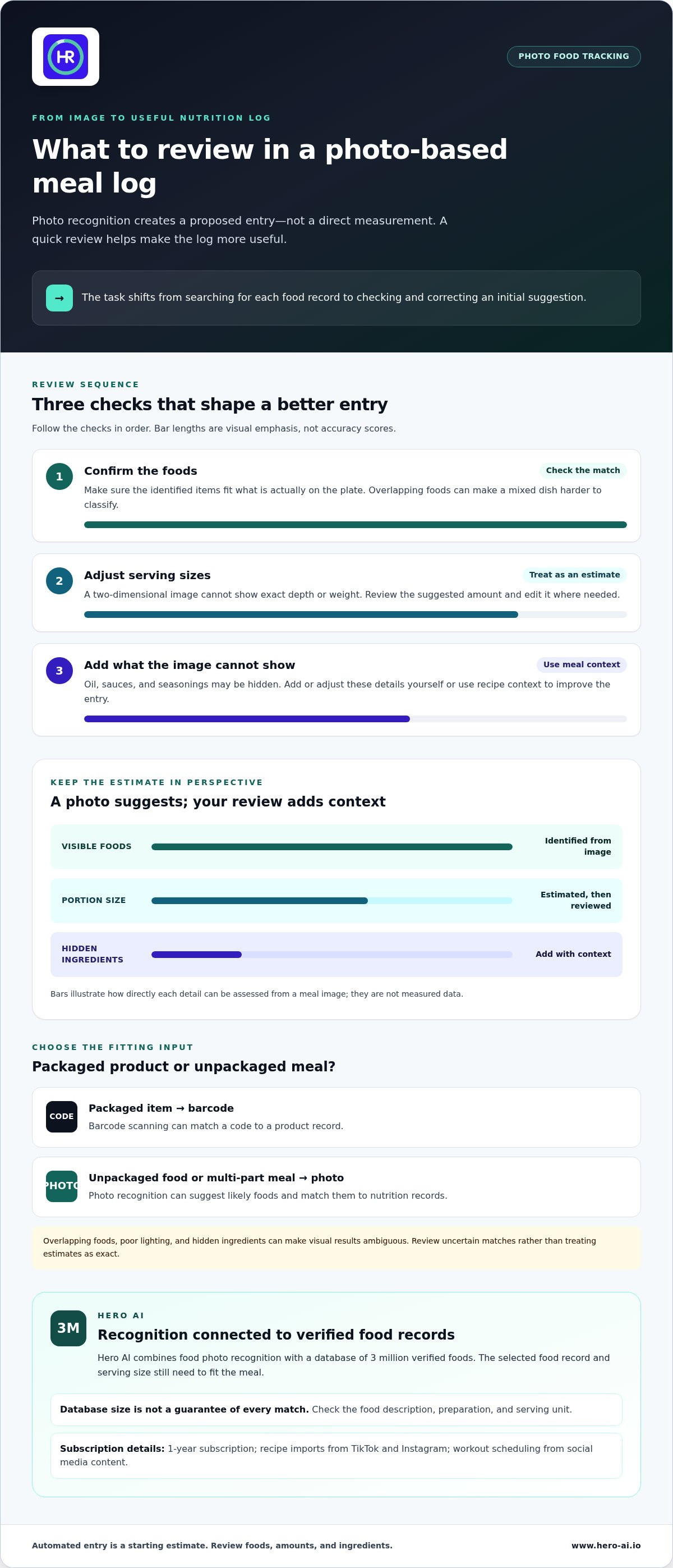
This changes the task from finding each database entry to reviewing and correcting an initial result. A photo food tracker subscription can make that process more efficient, especially for meals without packaging or barcodes. To get a more useful entry, check that the foods are identified correctly, adjust serving sizes where needed, and add ingredients the image cannot show.
Computer Vision in Nutritional Science
Image analysis commonly begins by separating a meal into regions that may represent distinct foods. Object detection can then label visible items, such as rice, vegetables, or a protein source. Deep-learning models compare visual features with patterns learned from food images. For a mixed dish, the system may identify likely components, but overlapping ingredients can make classification less certain.
Estimating quantity is more complex. A two-dimensional image does not reveal exact depth or weight. Systems may use visible dimensions, reference objects, camera perspective, and learned portion patterns to estimate volume. They then connect the estimated food and amount with nutrient values from a database. Food composition databases provide structured information about the nutrients associated with foods, but the final estimate depends on selecting an appropriate entry and serving size.
Hidden ingredients require particular care. Oil, sauces, and seasonings may not be visible, so image recognition cannot reliably measure them from appearance alone. Recipe context or your edits can improve the entry. Treat the result as a starting estimate, then add or adjust details that the image cannot establish.
Eliminating Manual Data Entry Friction
Manual logging typically involves searching for foods, choosing matching records, and entering quantities. Photo logging can combine identification and database matching into an initial suggestion. The time saved varies with meal complexity and the corrections needed. A simple meal with clearly separated foods may need fewer edits than a mixed dish with hidden ingredients.
Fewer repeated entry steps may make consistent logging easier to maintain. The practical shift is from searching through records to validating a proposed meal entry. Check the detected foods, serving amounts, and ingredients that may be hidden. Automation can streamline capture, but this review step still matters.
Hero AI connects photo recognition with a database of 3 million verified foods. Its 1-year subscription applies this automated approach within a broader fitness platform, helping organize nutrition records while keeping visual estimates in perspective.
Technical Architecture of Photo Food Tracker Subscriptions
A photo food tracker subscription connects image capture with food recognition and nutrition data. In a typical system, a camera records a meal, and image-analysis software identifies likely items. The app then matches those items to food records and estimates portions. Some processing may happen on the device, while more complex analysis may use cloud-based systems. The exact workflow varies by platform.
Hero AI combines food photo recognition with a database of 3 million verified foods. The database gives the recognition process a broad set of nutritional records to match against. A database entry provides nutrition information for a food, but it does not verify the ingredients or portion size of an individual meal. Those details still affect the estimate.
Database Integrity and Verification
User-submitted records and verified food records are not equivalent. User-generated entries can expand a library, but differences in naming, serving units, or nutrient values can create inconsistent matches. A verified database aims to provide more dependable reference records. Its usefulness also depends on clear food descriptions and records that match the item being logged.
Maintaining a large library can involve correcting duplicates, reviewing nutrient values, and aligning food descriptions and units. Hero AI’s database contains 3 million verified foods. Its stated size and verified status indicate the scale of the available records, but database size alone does not confirm the quality of every individual match.
Food names, ingredients, and preparation styles vary across cuisines. When assessing a food match, look beyond a familiar name: check the description, preparation, and serving unit. A large database can offer many reference records, but the selected record still needs to fit the food on your plate.
Barcode Scanning and Visual Fail-safes
Barcode scanning can identify packaged products by matching a code to a product record. Photo recognition can complement this method for unpackaged foods or meals with multiple components. Use the method that best fits the food: a barcode for a packaged item, and a photo for a meal or food without a code.
Visual results can be ambiguous when foods overlap, lighting is poor, or ingredients are hidden. Review uncertain matches rather than treating estimates as exact. Hero AI includes photo recognition and a verified food database as part of its platform, along with barcode scanning. The Hero AI 1-year subscription brings food tracking into a broader fitness platform.
Subscription Value vs. Manual Tracking Alternatives
A paid nutrition tracker is useful when it reduces repeated work or provides data that supports a consistent routine. Manual logging may be enough if you track a small set of familiar foods and are comfortable finding and entering each record. A photo food tracker subscription is more relevant when frequent meal searches and portion entries create friction, or when you want food recognition and access to a verified database in one workflow.
Compare value by looking beyond the subscription fee. Consider how often you log meals, how much effort you spend locating matching records, and whether you use nutrition trends to guide your planning. If automated recognition reduces repeated entry steps, that may justify a paid plan for your routine. It does not make every estimate accurate or make a subscription worthwhile for every tracking style.
Data Accuracy as a Subscription Benefit
Verified food records can provide a more consistent reference than entries with uncertain descriptions or nutrient values. That matters when someone uses macro totals to guide a muscle-gain or weight-loss plan. Still, an accurate database entry cannot correct an incorrect food match or an imprecise portion estimate. Better records can reduce one source of error, not eliminate all uncertainty.
There is no universal figure for the cost of nutritional guessing or the value of more accurate tracking. The practical effect depends on logging consistency, food choices, portion estimates, and how you use the data. Hero AI’s 1-year subscription brings photo recognition and a database of 3 million verified foods into its fitness platform. Its value is in the combined workflow, not a guaranteed fitness outcome.
Systematic Health Management
A log records entries. An automated system can also reduce the administrative steps required to capture meals and bring that information into a wider fitness routine. Hero AI includes recipe imports from TikTok and Instagram and workout scheduling from social media content. These functions connect food and activity planning instead of leaving each item in a separate manual record.
A subscription is most useful when its included functions solve tasks you regularly face. Identify what you want to streamline, such as recording meals, bringing recipes into your food log, or organizing workouts. Then consider which results still need your review and whether those tools fit your routine.
- Manual logging: Offers direct control and can work well for a small set of familiar meals.
- Automated logging: Can reduce repeated searches, while still requiring review of uncertain foods and portions.
- Annual subscription: Makes sense when its combined tracking and planning functions provide ongoing practical value.
Integrating Social Media Content into Nutritional Workflows
Social media recipes often combine written captions, on-screen text, spoken instructions, and visual demonstrations. Turning that content into a nutrition entry requires more than saving a link. A typical workflow identifies the recipe, extracts ingredients and quantities, standardizes food names, and matches them with nutrition records. Macro estimates can then be calculated from the matched foods and stated amounts.
Each step can introduce uncertainty. A video may omit an ingredient quantity, show an optional topping, or demonstrate a serving size that differs from the final dish. Substitutions and cooking methods can also change the resulting nutrition profile. Imported recipes are useful starting records, but review ingredients, amounts, and serving count before relying on the calculated values.
Recipe Importation Protocols
Automated import can reduce the need to transcribe a recipe manually. In a general technical pipeline, text recognition and language processing may identify ingredient names and quantities from captions or on-screen content. The system can normalize those terms, match them to food records, and estimate nutrition totals. Hero AI supports automated recipe imports from TikTok and Instagram, connecting social recipe discovery with nutrition tracking.
Matching ingredients to a verified database helps translate recipe components into structured food records. Hero AI’s database contains 3 million verified foods. Those records provide reference entries, while recipe quantities and serving sizes determine how the resulting estimates apply to a meal. Review imported details, especially when quantities or substitutions are unclear.
This workflow connects recipe discovery with logging. Instead of keeping a saved recipe separate from a food record, you can bring recipe content into your broader nutrition routine. A photo food tracker subscription that links recipe imports with meal tracking can reduce duplicated entry, while review remains important for more representative portions and ingredients.
Social Media Workout Scheduling
Fitness content can also require a manual step between viewing an exercise routine and adding it to a plan. Hero AI integrates workout scheduling from social media content, helping connect content discovery with planned activity. Scheduling turns a saved idea into an item within a fitness routine, where it can be considered alongside meal tracking.
For people who follow fitness content on social media, this can bring planning out of separate saved posts and records. The value depends on reviewing imported recipe details and organizing workouts in a way that fits your plan. Explore the Hero AI 1-year subscription to connect social content with nutrition and workout planning.
Hero AI 1-Year Subscription: Service Specifications
Hero AI’s 1-year subscription brings nutrition tracking and fitness planning into one platform. Food photo recognition supports meal logging, while a database of 3 million verified foods provides nutritional records for recognized items. Recipe imports from TikTok and Instagram connect social content with food tracking. Workout scheduling from social media content adds an activity-planning component.
This combination supports more than a standalone food diary. You can organize meal and workout information within a broader routine. A photo food tracker subscription is most useful when its features fit the way you already plan meals and activity. The system can reduce manual entry, but you should still review food matches and portion estimates.
Administrative Features and Access
The subscription includes food photo recognition, verified food data, recipe imports, and workout scheduling. Together, these features can consolidate nutrition and activity planning that might otherwise sit across separate records. For example, you can import a social media recipe, review its food information, and schedule workouts from social content as part of a consistent planning process.
The 1-year term provides a defined period to use the platform’s features and build a routine. It does not guarantee a specific fitness milestone. Progress depends on factors such as individual goals, routine, and consistent use of the information. The subscription’s administrative value comes from keeping related planning activities in one platform, not from a promised outcome.
Implementation and Next Steps
Start with a repeatable routine. Capture meals with photo recognition, review identified foods and portions, and use recipe imports when social content informs meal choices. Add relevant workouts to the schedule. Consistent review helps keep records useful and makes it easier to notice patterns over time.
Before you begin, define a practical goal, such as maintaining a regular meal log or organizing planned workouts. Then use the platform’s tools as part of that routine. The Hero AI 1-Year Subscription: Functional Service Overview provides further information about the subscription. The annual plan brings food tracking and fitness planning together for ongoing use.
Build a More Connected Nutrition Routine
Automated visual tracking can reduce repetitive meal-entry steps, while food recognition and database matching provide a structured starting point for nutrition logs. Estimates still benefit from review, particularly when portions or ingredients are unclear. The value of a photo food tracker subscription depends on how well its tools fit a consistent routine.
Hero AI combines AI-driven photo food recognition with a database of 3 million verified foods. Automated recipe imports from TikTok and Instagram connect social content with meal planning, while workout scheduling brings activity planning into the same fitness platform. Together, these features support a more centralized approach to everyday nutrition and fitness planning.
A 1-year subscription gives you a defined period to use these tools and build consistent tracking habits. Set a practical routine, review your entries, and use the information to guide your planning. Start your Hero AI 1-Year Subscription and bring nutrition and fitness tracking into one workflow.
Frequently Asked Questions
How accurate is photo food tracking compared to manual weighing?
Manual weighing measures food mass directly, while photo tracking estimates foods and portions from an image. A photo can speed up logging, but it cannot establish exact weight or reliably show hidden ingredients. Accuracy also depends on correct food identification and portion size. Treat image results as estimates and review the detected foods and quantities. Weighing can provide more precise portion data when used with an appropriate nutritional record.
Does the Hero AI subscription include access to all 3 million verified foods?
Yes. The Hero AI 1-year subscription provides access to a database of 3 million verified foods for nutritional matching. This gives photo recognition a broad set of records to use when identifying foods and estimating nutrition. A database match is still a reference, not a measurement of the meal itself. Review serving size and food selection, since those details affect the recorded calories and macros.
Can I import recipes from TikTok and Instagram directly into my macros?
Hero AI supports automated recipe imports from TikTok and Instagram for nutrition tracking. Imported recipes can connect social media food ideas with meal records, reducing the need to transcribe every ingredient from scratch. Macro estimates depend on the ingredients, quantities, and serving information available for the recipe. Review these details before using the result in your daily nutrition totals.
What happens if the AI fails to recognize a specific food item?
Review the suggested match rather than treating an uncertain identification as exact. For a packaged food, Hero AI also provides barcode scanning, which offers another way to identify the product. For an unfamiliar meal or ingredient, check whether the suggested record and serving size fit what you ate. Photo recognition can streamline logging, but visual estimates may need review.
Is a 1-year subscription required to use the photo recognition feature?
Hero AI’s subscription offering is a 1-year plan, and it provides access to AI-powered photo food tracking. The same plan includes access to the verified food database and other nutrition and fitness tools. The subscription supports ongoing use of these features as part of a regular tracking routine. Photo recognition can reduce manual entry, while meal details still benefit from review.
How does Hero AI handle nutritional data for home-cooked meals?
Hero AI uses photo recognition to identify visible foods and match them with records in its verified food database. This can help structure a home-cooked meal for tracking. Nutrition estimates depend on the foods recognized, ingredient quantities, and serving size. Oil, sauces, or other ingredients may be difficult to identify from an image alone. Review recipe details and portions to make the log more representative.
Does the subscription include workout scheduling from social media?
Yes. Hero AI includes workout scheduling from social media content as part of its fitness platform. This feature connects exercise content with planned activity, alongside food photo tracking and recipe imports. For example, you can organize a workout discovered through social media within a broader fitness routine. The schedule supports planning; it does not determine whether a particular workout is suitable for you.
Is the food database updated for 2026 nutritional standards?
Hero AI’s stated database feature is 3 million verified foods for nutritional matching. This describes the scale and verified status of the food records, but not a separate 2026 standards update cycle. When logging meals, use the matched food record as a reference and check that its description and serving size fit the item being tracked. Photo estimates still depend on the meal details provided.


