

A food database can matter as much as a macro dashboard. A strength athlete meal logging tool should make it easy to record portions, review food entries, and track protein and carbohydrates. The right choice depends on how you prefer to log meals and whether the available foods match your eating pattern.
Accurate entries start with portions. A tool may offer serving-size selection, weight entry, or barcode scanning, but its process and database coverage can vary. A large database is useful only if you can find the foods you eat and record them in a way that reflects your meal.
This article explains how to compare portion tracking and food databases, and how tools display protein and carbohydrate intake. It also covers how keto, paleo, and vegetarian preferences affect food selection and logging. Use these criteria to find features that fit your routine and make records easier to maintain.
Key Takeaways
- Choose a logging method that lets you record portions in a way that fits your meals and routine.
- Check whether the food database includes the foods and serving options you use regularly.
- Compare how tools display protein and carbohydrates, and how they support keto, paleo, or vegetarian choices.
- Assess app features by how easily they fit your training and meal-tracking habits, not by feature count alone.
- For faster meal entry, Hero AI can log food using photo recognition, barcode scanning, or imported social media recipes.
1. Digital food scales and portion tracking
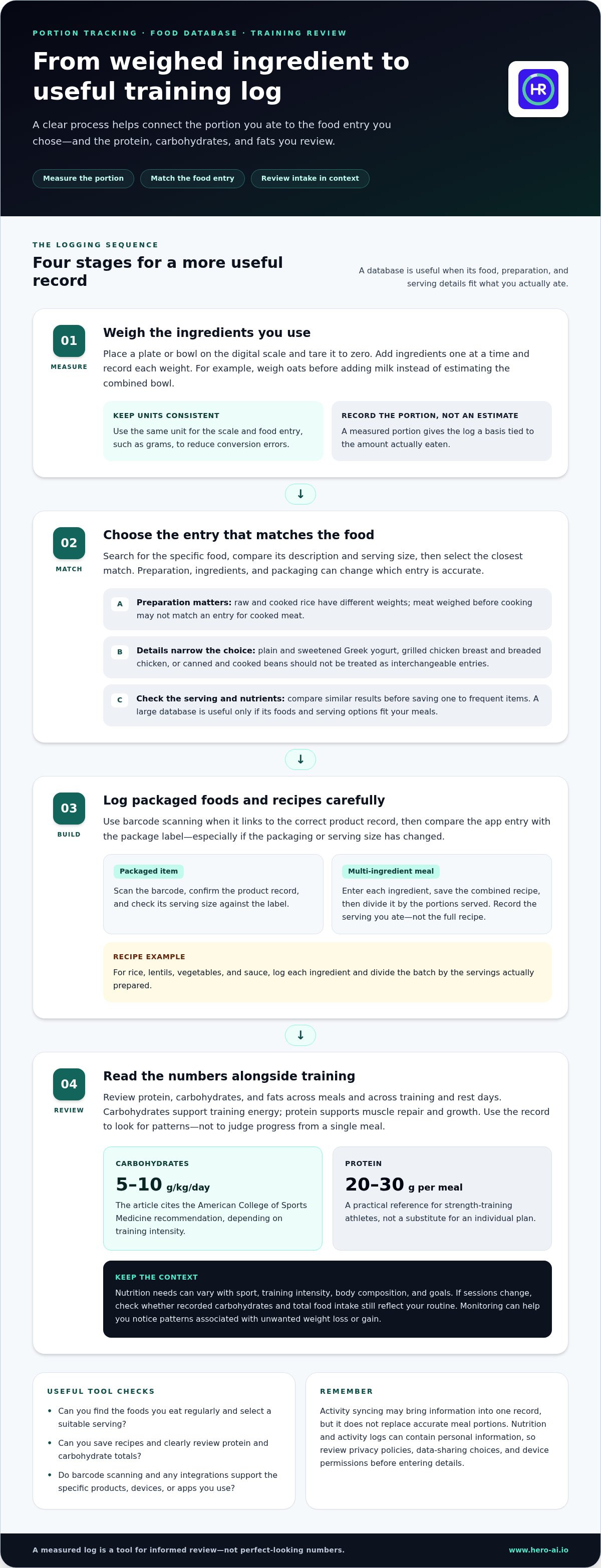
A digital food scale gives your meal log a measured portion rather than a visual estimate. Place a plate or bowl on the scale, tare it to zero, then add each ingredient and record its weight. For example, weigh oats before adding milk instead of estimating the combined bowl. Use the same unit for the scale and food entry, such as grams, to reduce conversion errors.
Match the food entry to how you weighed it. Raw and cooked rice have different weights, so selecting the wrong database entry can distort the record. The same applies to meat weighed before or after cooking. For a recipe, log each ingredient separately, save the combined recipe, then divide it by the portions served. If you eat one portion, record that serving rather than the full recipe.
Calorie and macronutrient tracking can show how protein, carbohydrates, and fats contribute to daily intake. Carbohydrates support training energy, while protein supports muscle repair and growth. The American College of Sports Medicine recommends 5-10 grams of carbohydrate per kilogram of body weight per day, depending on training intensity. Strength-training athletes can use 20-30 grams of protein at each meal as a practical reference. These figures are not a substitute for an individual plan.
Use your log to compare intake with training demands, not just to collect numbers. An athlete’s nutrition needs can vary with sport, training intensity, body composition, and goals. Review entries across training and rest days. If your sessions change, check whether recorded carbohydrates and total food intake still reflect your routine. Monitoring intake can also help you notice patterns associated with unwanted weight loss or gain.
Can meal logging tools sync with fitness trackers and workout apps? Some can, if they support integrations with the specific device or app. A sync may bring activity information into the same record, but it does not replace accurate meal portions.
Are there privacy concerns with nutrition tracking apps? Nutrition and activity logs can contain personal information. Before entering details you do not want shared, review the app’s privacy policy, data-sharing choices, and device permissions.
Tracking carbohydrates, protein, and fat can help athletes review their intake alongside training. A measured log shows how these nutrients are distributed across meals, with each entry tied to the portion actually eaten. Consider the record in light of training demands rather than treating a single meal as a verdict on progress. The goal is a useful picture of intake, not perfect-looking numbers.
Monitoring dietary intake can help athletes avoid unhealthy weight-loss or weight-gain practices. A record can highlight patterns that might otherwise go unnoticed and support a more considered response when body-weight changes are a concern. Use that information to assess whether food choices and portions remain aligned with the athlete’s needs and goals. Tracking is most useful when it encourages steady, informed decisions rather than extreme adjustments.
2. Food logging and food database access
A food database determines which entry appears when you record a meal. Search for a specific food, compare the description and serving size, then choose the closest match. For example, plain and sweetened Greek yogurt should not share an entry if their nutrition differs. A large database can offer more options, but the accuracy of the match matters more than the number of search results.
Check how entries describe preparation and packaging. Grilled chicken breast may differ from a breaded chicken product, while canned beans may differ from cooked beans. Brand names, ingredients, and preparation details help narrow your search. If several results look similar, compare their serving units and listed nutrients before saving one to your frequent-items list.
Barcode scanning can speed up packaged-food logging when the barcode links to the correct product record. Compare the app entry with the label, especially if the packaging or serving size has changed. Recipe logging is useful for meals with several ingredients: enter each one, save the recipe, then record the portion you eat. For example, divide a batch of rice, lentils, vegetables, and sauce by the servings actually prepared.
Which meal tracking apps support barcode scanning and recipe logging? Features vary by app. Look for both functions in the tool’s feature information, then test a packaged item and a saved recipe to see whether they suit your routine.
Food logging can help athletes notice gaps in their eating patterns. Reviewing meals across training days may reveal that fruit, vegetables, or other nutrient sources appear infrequently. Nutrition tracking can help identify potential nutrient deficiencies and support balanced intake of essential vitamins and minerals. It does not diagnose a deficiency, but a consistent record can make patterns easier to discuss with a qualified health professional.
What are the best free meal logging tools for strength athletes? Look for a free option that includes the foods you eat, lets you record recipes, and clearly displays protein and carbohydrate totals. Compare those functions using a typical training-day menu instead of choosing by database size alone. Free access and available features vary between tools.
For a practical test, record a full day of eating. Include a packaged snack, a home-prepared meal, and a post-workout food. Check whether each entry is easy to find, its serving unit makes sense, and saved recipes are simple to reuse. This shows whether the database supports your actual food choices and recovery routine.
Diet preferences including keto, paleo, and vegetarian
A meal logging tool should help you find foods that fit your eating pattern, not just display macro totals. Keto commonly prioritizes low-carbohydrate choices, so check whether entries distinguish unsweetened yogurt from sweetened yogurt. Paleo-style eating commonly excludes grains, legumes, and dairy, making ingredient details useful for packaged or mixed foods. Vegetarian patterns vary, so look for entries that let you identify options with or without eggs and dairy.
Use food search and saved-meal features to assess how well a database fits. For keto, test a meal of eggs, leafy greens, and avocado, then review its carbohydrate and protein entries. For paleo, search for a meal made with fish, vegetables, and root vegetables, and inspect ingredient details for additions. For vegetarian eating, log tofu, lentils, or dairy-based foods according to your own pattern. These examples show whether food names and portions are easy to distinguish.
Macro displays can help you compare logged meals with training needs. Strength athletes may track protein and carbohydrates alongside fats, while dietary preferences shape which foods supply them. A vegetarian might use tofu, beans, or eggs as protein sources; someone eating keto may choose eggs or fish. Food logging can also reveal repeated gaps in food variety. Nutrition tracking may help identify potential nutrient deficiencies and support balanced intake of essential vitamins and minerals.
Eating preferences can affect recipe entry as much as individual food selection. Before saving a meal, enter its ingredients separately and check sauces, toppings, and substitutions. For example, replacing dairy with a plant-based alternative changes the recipe entry, while swapping grain-based sides for vegetables changes its recorded composition. Save the version you actually prepare so the reusable recipe reflects your eating pattern, not a default version.
Hydration can be recorded separately from meals if a tool includes a water log. Check whether you can enter drinks in the units you use, and keep water records distinct from foods with macros. To compare tools, enter a sample day that includes breakfast, a pre-workout meal, and a recovery meal. Review search results, ingredient details, recipe editing, and macro summaries. The best fit handles your preferred foods without repeated workarounds.
4. Best meal tracking apps for strength training and bodybuilding
No single app suits every strength athlete. A strength athlete meal logging tool should match your entry habits and make records easy to review. Compare options by entering the same training-day menu into each one. Include a packaged snack, a home-cooked meal, and food eaten away from home. Note how many steps each entry takes, how easy the food is to find, and how clearly the daily summary presents your intake.
Some tools rely on manual entry, which can suit athletes who prefer to search for foods and record portions directly. Database-focused options can help when meals include varied ingredients or familiar packaged products. Photo-assisted logging may reduce typing for a plate with several visible foods, but review suggested entries before saving. Each method has trade-offs: faster entry may need more corrections, while detailed manual logging takes more input.
For bodybuilding meal plans, recipe handling can make a practical difference. Test a recurring meal, such as a rice bowl with chicken, vegetables, and sauce. Check whether you can save its ingredients and adjust the portion when your serving changes. If your plan includes meals around a workout, see whether the app organizes entries by time or meal label. A strength athlete meal logging tool should make repeated records easy to compare.
Training routines and food choices can change, so check whether an app lets you edit saved meals when ingredients change. For example, replacing chicken with tofu should update the meal record rather than leave an outdated ingredient. Review whether the app presents protein, carbohydrates, and fats clearly. If the screen emphasizes unrelated metrics, routine checks may take longer. Test these tasks before deciding whether the interface fits your schedule.
Use a consistent comparison process. Enter the same day of eating into each option, then assess database matches, recipe editing, meal organization, and summary views. Check support for the entry methods you use, such as barcode scanning or food search. Consider whether the app is manageable on a busy training day. When choosing a strength athlete meal logging tool, prioritize the one that records your actual meals consistently, not the one with the longest feature list.
Meal records can help you compare eating patterns with changing training demands, but an app does not replace sport-specific guidance. Team USA's sports dietitians bring sport-specific expertise to help athletes meet the demands of training, competition, and life beyond sport. The U.S. Olympic & Paralympic Committee's athlete plate handouts help guide food choices according to changing training demands. Use those resources alongside your records when reviewing what you eat around training, rather than treating an app summary as a complete plan.
Recovery is another reason to review meal timing and composition. Sports nutrition guidelines recommend focusing on nutrient timing and suitable nutrient composition to support faster recovery after training. It is typically recommended to drink 500-600 mL of water 2-3 hours before training and 200-300 mL of water every 15-20 minutes during long training sessions. If supplement claims influence what you log or buy, Utah Tech's nutrition guidance recommends consulting a strength coach or athletic trainer before trusting supplement claims. A useful app should make it easier to keep track of your choices while you seek guidance from qualified sport and training professionals.
5. How accurate are food tracking apps for athletes?
Food tracking apps can produce useful records, but accuracy depends on each entry. Even a correct calculation gives a poor estimate if you select the wrong food or serving. For example, cooked and uncooked rice are different database entries. Check the food description, preparation state, and serving unit before logging. Consistent choices make comparisons across training days more meaningful.
Portion estimates affect the result too. The amount of peanut butter logged may differ from what you actually use in a sandwich. Use a scale when practical, or select a serving that matches the portion eaten. For mixed meals, enter ingredients separately or use a saved recipe based on the actual ingredients. Record substitutions, such as a different sauce, rather than relying on an unchanged recipe.
Packaged-food records also need review. A barcode may lead to a product entry, but compare its serving size and nutrition details with the package label. A brand may sell similar products with different ingredients, such as sweetened and unsweetened yogurt. Choosing the wrong version can change the recorded calories and macros. Check the item name and serving information before adding it to your daily log.
Photo recognition can speed up meal entry, but a photograph cannot show every ingredient or portion precisely. A bowl may hide oil, dressing, or toppings beneath other foods. Review suggested foods and correct them if the image misses a component. For a meal with rice, vegetables, and meat, add or adjust each component before accepting the record.
Use trends rather than treating a single entry as a precise measurement. Compare similar meals logged consistently across training and rest days. If a total changes sharply, inspect entries for altered portions, duplicate foods, or a different preparation method. Keep a repeatable routine for common meals to make your log more useful when reviewing nutrition alongside workout demands.
For a practical accuracy check, log one familiar meal using both manual search and photo recognition. Compare the suggested foods, ingredients, and portions, then correct mismatches. Repeat the test with a packaged item and a saved recipe. This process shows where review is needed before you rely on daily summaries. Try photo-based meal logging as one entry method.
Hero AI: 1 year subscription
Hero AI offers a 1 year subscription for athletes who want a streamlined way to record meals. The platform uses photo recognition, barcode scanning, and a database of over 3 million verified foods. It can also import recipes from social media platforms such as TikTok and Instagram. These options suit athletes who want alternatives to searching and entering every food manually. Review suggested meal entries to ensure they match the foods and portions you consumed. Hero AI also lets users schedule workouts from social media content, bringing meal logging and fitness planning into one platform. If these features fit your routine, visit Hero AI.
Make your next training block easier to assess
Set a clear purpose for your food log before changing your routine. You might use it to spot meal-timing patterns, compare training and rest days, or identify entries that need more careful portion recording. A strength athlete meal logging tool is most useful when its records inform practical decisions, not when logging becomes an end in itself. Review the information regularly and focus on patterns relevant to your training goals.
Choose one adjustment at a time. For example, if your recorded meals differ from your plan on demanding workout days, revise your meal routine and keep logging consistently. This provides a more useful comparison than changing several habits at once. Keep the process manageable, and adapt it when your schedule or training priorities shift.
If you want to explore meal logging with Hero AI, contact Hero AI to discuss your needs. Start with a routine that fits your training, then use the record to guide your next steps.
Frequently Asked Questions
What features should a meal logging tool have for strength athletes?
Prioritize clear macro totals, flexible food entry, and summaries you can review alongside training. Try logging a demanding workout day and a rest day, then compare the records. Check whether you can correct an entry when a meal changes and whether daily views make the differences easy to see. Avoid choosing by feature count alone; focus on functions you will use consistently.
Which meal logging apps track calories, protein, carbs, and fat?
Choose an app that displays all four measures in food entries and daily summaries, not just calories. Hero AI is one option for tracking calories and macros. Before settling on a tool, enter a familiar meal and check that calories, protein, carbohydrates, and fat appear together. This quick test can show whether its tracking view supports the comparisons you need during a training block.
How should strength athletes set calorie and protein targets in a meal logging app?
Set targets around your sport, training intensity, body composition, and goals, then use them as planning references. The American College of Sports Medicine recommends 5-10 grams of carbohydrate per kilogram of body weight per day, depending on training intensity. A practical meal reference is 20-30 grams of protein at each meal. Avoid treating an app target as a personalized prescription; review it as your training and goals change.
Which meal tracking apps support barcode scanning and recipe logging?
App features vary. Check each tool’s feature information for barcode scanning and recipe logging, then test a packaged item and a saved recipe to see how well they fit your routine.
What are the best free meal logging tools for strength athletes?
Choose a free tool that includes the foods you eat, lets you record recipes, and clearly displays protein and carbohydrate totals. Test it with a typical training-day menu, since free access and features vary.


