

Your maintenance target is an estimate, not a fixed number. An app for tracking maintenance calories can help you compare logged food intake with activity and estimate a daily target. The estimate starts with resting energy expenditure and applies an activity factor generally ranging from 1.2 to 1.95.
A calorie total is only part of the picture. Food logs can also show macronutrients, while activity records help explain changes in your daily needs. Weight, workouts, water, and fasting periods are separate data points, and the information you can track depends on the app.
This guide explains which nutrition and activity details are useful to track, how maintenance calories are estimated, and how to compare your logged intake with weight trends over time. It also covers planning calories and macros across the week, including how to distribute a weekly target across higher- and lower-calorie days.
Key Takeaways
- Estimate maintenance calories by combining resting energy expenditure with an activity factor, then use the result as a starting point.
- Log food, macronutrients, activity, and weight to build a more useful picture than calories alone provide.
- Compare your intake with weight trends over time to refine your personal maintenance estimate.
- Plan calories across the week by setting a weekly target and distributing it across days to suit your routine.
- Treat activity-based calorie-burn estimates cautiously, and use consistent food logging to support your planning.
What nutrition data can I track besides calories?
Track food intake, body weight, exercise, and general activity to estimate maintenance calories. Enter your age, height, and body weight when calculating a starting estimate. Apps can misjudge food portions or calories burned, so treat their results as estimates, not measured values.
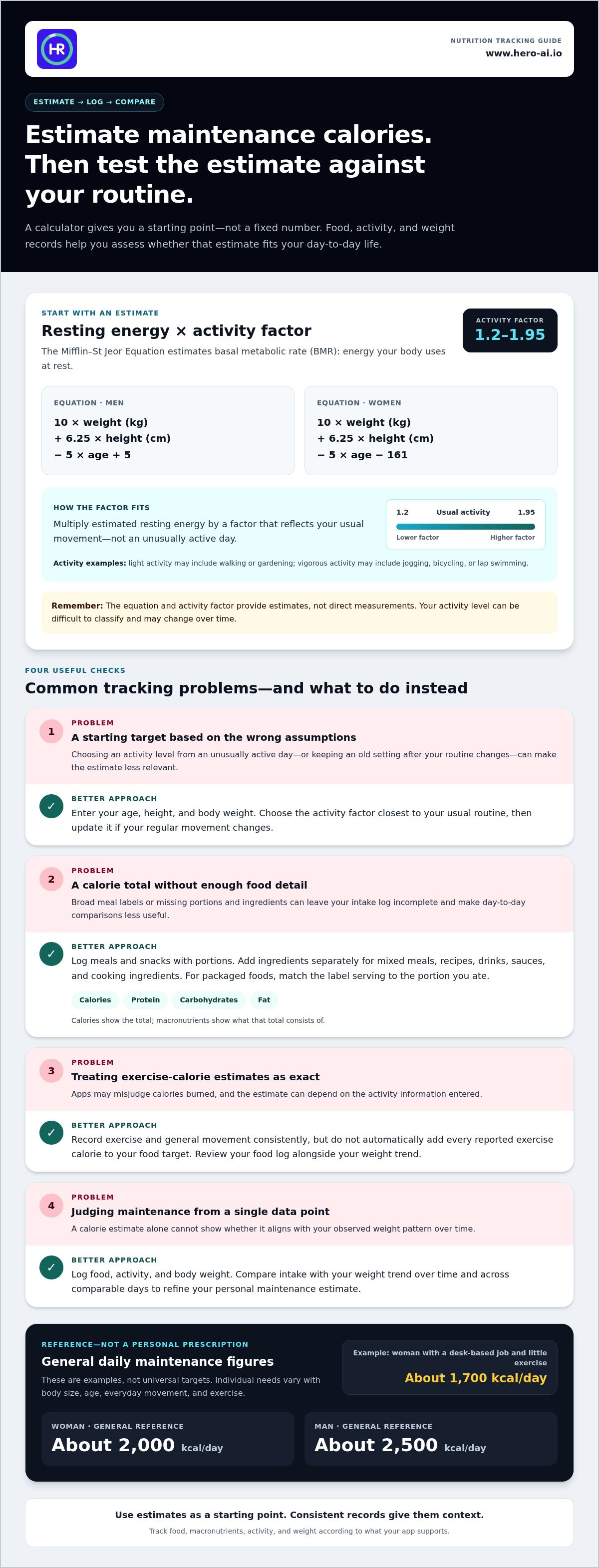
Basal metabolic rate (BMR) is the estimated energy your body uses at rest. The Mifflin-St Jeor Equation estimates BMR using body weight in kilograms, height in centimeters, and age. For men, it calculates 10 times weight plus 6.25 times height, minus 5 times age, plus 5. For women, the same calculation subtracts 161 instead. These equations provide an estimate, not a direct measurement of energy use.
An activity factor adjusts estimated resting energy expenditure to account for movement. Maintenance calculators generally multiply that estimate by an activity factor from 1.2 to 1.95. Choose a factor that reflects your usual routine, not an unusually active day. The Mayo Clinic calculator describes light activity as walking or gardening, and vigorous activity as jogging, bicycling, or lap swimming. Classifying your own activity level can be difficult, and it can change over time, so use the result as a starting point.
A maintenance estimate is the daily calorie intake predicted to keep body weight stable. To use an app, enter the requested personal details, select the activity level closest to your routine, and review the resulting target. Compare that estimate with your logged intake and weight trend. If your routine changes, such as when you add regular exercise or become less active, update the activity setting instead of assuming the original estimate still applies.
Food and activity logs record information that helps explain your estimated energy balance. Log meals and snacks with portion details, then record exercise and general movement consistently. Weight entries add context by showing whether the target aligns with your observed trend. You can also log water and fasting periods to review your routine, but they do not replace food, weight, or activity records in a calorie estimate.
A calorie-burn estimate is an app’s calculation of the energy used during activity. Treat it cautiously: estimates may not always be accurate, and results can depend on the activity information you enter. Avoid automatically adding every reported exercise calorie to your food target. Record your exercise, log food consistently, and assess your weight trend before changing your maintenance estimate.
How do I know my personal calorie intake for weight maintenance?
Maintenance intake is the energy level associated with a stable weight over time. Use general figures as reference points, then compare them with your own records.
Daily Calorie Needs for Maintenance
Daily calorie needs are the estimated energy intake that supports weight stability. General reference figures are about 2,000 kcal per day for a woman and 2,500 kcal per day for a man. These figures are examples, not universal targets. A typical woman with a desk-based job, who drives to work and gets little exercise, may need about 1,700 kcal per day.
Individual needs vary with body size, age, and everyday movement. Someone who walks throughout the workday may have different needs from someone who spends most of the day seated. Exercise also affects energy use, but a workout is only one part of total daily activity. Consider your whole routine, including work, commuting, and movement outside planned exercise.
Use a calculator’s estimate as a starting point, not a fixed instruction. Compare it with your usual intake and weight pattern across comparable days. If your schedule changes, reassess the activity assumptions behind the estimate. A target based on an active routine may not suit a period with less movement. The aim is to find a practical estimate that reflects your current habits.
Food, Calorie, and Macronutrient Logging
Food logging records meals and snacks so you can assess daily calorie and macronutrient intake. Macronutrients are protein, carbohydrates, and fat. Record portions and ingredients, especially for meals with several components. For example, list the separate ingredients in a homemade lunch rather than relying on a broad label such as “lunch.” This gives you a clearer picture of what contributes to your daily total.
Use the same approach for similar foods each day. When you prepare a recipe, record its ingredients and the portion you eat. For packaged foods, use the serving information on the label and adjust it to match your portion. Include drinks, sauces, and cooking ingredients. Missing items can make your log appear lower than your actual intake and make day-to-day comparisons less useful.
Review the calorie total alongside the macronutrient breakdown. Two days with similar calories can have different proportions of protein, carbohydrates, and fat. Check that the recorded meals reflect your usual eating pattern before making adjustments. If your log repeatedly misses ingredients or portions, improve those entries first. A consistent record helps you assess whether the estimated target suits your routine.
Tracking calories and macronutrients
Calorie tracking records the energy in food and drinks, while macronutrient tracking records protein, carbohydrates, and fat. Together, they show both your total intake and what it consists of. Your daily calorie total can match a target even when the nutrient balance differs, so recording both gives you a fuller picture of your meals.
Start each entry with the food or drink and its portion. Add ingredients separately for a mixed meal when you know their amounts. For example, logging a bowl of rice, vegetables, and protein as separate items makes the meal easier to review than entering only “lunch.” Include snacks, sauces, and drinks. Small omissions can make your daily total less representative.
Use the same logging approach from day to day. When a package label or recipe provides nutrition information, use it to record the serving you ate. For meals without a label, choose the closest food entry and estimate a practical portion. Consistent methods matter: changing serving assumptions can make two similar meals appear different in your records.
- Calories: Review the daily total against the target you are assessing.
- Protein: Record protein-containing foods as part of each meal.
- Carbohydrates: Include foods such as grains, fruit, and starchy vegetables.
- Fat: Include oils, spreads, and other ingredients used in cooking.
Macronutrient totals help explain why meals with similar calories can differ. For example, a meal built around grains and fruit has a different nutrient composition from one based on eggs and oils. Logging the ingredients helps you identify those differences without relying on the meal’s name alone. It also lets you review how your food choices align with your eating plan.
Use your records to spot patterns, not to treat one entry as the whole picture. Compare similar days, such as workdays with other workdays, and note meals or ingredients you often leave unrecorded. If a log shows lower intake than expected, review portion sizes and missing items before changing your target. Eating less than the body needs can lead to muscle loss and a lower calorie burn over time.
For a practical review, check the daily calorie total first, then examine the protein, carbohydrate, and fat entries. Note missing meals and uncertain portions. This helps distinguish a gap in your log from a change in your eating habits. A complete record gives you clearer information for assessing intake and planning meals.
Calorie cycling and weekly calorie targets
Calorie cycling varies daily calorie intake while keeping a weekly target. It assigns higher and lower amounts to different days instead of setting the same daily limit throughout the week. The weekly total remains the main reference. This approach can organize intake around exercise, work schedules, or social meals without changing the overall target.
A weekly calorie target is the sum of planned intake across the week. For example, a target of 14,000 calories per week gives you one total to distribute across seven days. Equal distribution would mean the same daily amount, while calorie cycling places different amounts on selected days. The planned amounts still need to add up to the weekly total.
One example schedule uses 2,300 calories on three days and 1,775 calories on the other four days. The calculation is 6,900 calories across the three higher days, plus 7,100 across the four lower days, for 14,000 calories total. This schedule has a 525-calorie difference between its daily amounts. The general guidance describes high- and low-calorie days as differing by approximately 200-300 calories, so the example is a distinct illustration.
To build a schedule, first set the weekly target you intend to follow. Then identify days when your routine changes, such as days with planned exercise or a shared meal. Assign higher or lower amounts to those days, then add the daily allocations. If the sum exceeds or falls short of the weekly target, adjust the plan before using it.
Use a food log to compare planned and actual intake each day. Record meals and snacks against that day’s allocation, then review the weekly sum. A higher-calorie day does not remove the need to track the remaining days. Likewise, a lower-calorie day is not a reason to ignore meals or leave the rest of the plan undefined.
Calorie cycling changes how the target is distributed, not the target’s arithmetic. If your goal is to maintain your weight, the weekly allocation should reflect your maintenance estimate. If your goal is weight loss, the target should reflect that different goal. Avoid judging the plan on one day alone: compare the full weekly record with your weight trend and usual activity.
You can also log macronutrients within each day’s calorie allocation. Keep your recording method consistent across higher- and lower-calorie days, including portions and ingredients. This makes it easier to see whether the planned schedule matches your actual intake. Review the pattern at the end of the week, then revise the distribution if work, exercise, or meal timing made the schedule difficult to follow.
How long should you track food and weight to find maintenance calories?
A maintenance-tracking period is a consistent record of food intake and body weight used to assess whether an estimated target matches your routine. Keep logging until you have enough comparable records to distinguish a lasting pattern from isolated daily changes. The time needed depends on how complete your records are and how consistent your routine remains.
Start by recording meals, snacks, and drinks each day. Include portion details and ingredients, especially for mixed meals. A missing lunch or unrecorded cooking oil makes that day’s intake less complete. Use the same logging method throughout the period, so changes in your totals reflect your eating rather than a change in recording habits.
Record body weight under consistent conditions, using the same scale at a similar time of day. A single reading can differ from your longer-term direction. Compare repeated readings with your food log instead of changing your target after one higher or lower result. For example, a higher reading after a different meal does not establish that your usual intake exceeds maintenance.
Note routine changes that could affect your comparisons. Record days with planned exercise, unusual travel, or a different work schedule. A week of regular commuting may not represent a week spent mostly at home. These notes help explain differences in your intake or weight records and show whether the estimate reflects your usual activity level.
Review your records in sequence. First, identify incomplete food entries. Next, compare intake with the direction of weight readings over the same period. Then assess whether your activity and daily routine were representative. If the records show a consistent trend, adjust the estimated maintenance target gradually and continue logging against the revised estimate.
Do not treat every fluctuation as a reason to revise your target. Look for repeated changes that align with your recorded intake instead of reacting to one entry or meal. If food records are incomplete, improve your logging before interpreting the results. If your activity changed, assess that period separately from records collected under a different schedule.
A useful record is consistent enough to compare, not simply long. Keep tracking if entries remain incomplete or your schedule changes frequently. When your record captures your usual meals, activity, and weight direction, use it to refine the estimate. Then continue recording periodically to see whether the target still suits your current routine.
Log meals and activity consistently to build a record you can compare with weight trends.
Hero AI: 1 year subscription
Hero AI supports food and activity logging for people who want to manage these records in one platform. It can log meals through photo recognition, barcode scanning, or recipe imports from TikTok and Instagram. Its database includes over 3 million verified foods, giving users options for recording different meals.
Hero AI also lets users schedule workouts from social media content. This can help connect meal records with workout planning when you want to organize both as part of your routine. A 1 year subscription is available for using the platform.
Visit Hero AI to explore the platform.
Make your next step consistent
Use your records to make deliberate adjustments, not daily reactions. Choose a routine you can maintain and decide what to review before changing your calorie target. An app for tracking maintenance calories can help organize your records, but its value depends on entries that reflect your actual habits.
Set a regular time to review your log. Note whether changes in your schedule, exercise, or meal patterns affect how easily you can record intake. If tracking feels burdensome, simplify the process while keeping the details that support your decisions. An app for tracking maintenance calories should fit your routine, not add steps you won’t sustain.
Build a process that fits your daily life, then adjust it as your routine changes. For support using Hero AI for nutrition and activity tracking, contact Hero AI for help. Start with a clear approach, and refine it as you learn what works for you.
Frequently Asked Questions
Can I track weight, workouts, water, or intermittent fasting?
Yes, if the app includes those logging options. Before using them, decide which records support your goal. For example, someone planning exercise sessions may prioritize workout scheduling, while someone monitoring hydration may prefer a water log. Tracking every available metric can add work, so choose entries you can record consistently and use to review your routine.
How Many Calories Do You Need?
Your daily calorie needs depend on personal factors such as body size, age, and movement throughout the day. A calculator can offer an initial estimate, but it cannot account for every detail of your routine. Consider whether your work, commute, and regular activities match the assumptions used in the estimate. Compare the result with your records before treating it as a personal target.
What are the best apps for tracking maintenance calories?
The best app for you is one that fits your logging habits and presents information in a useful way. Consider how quickly you can enter meals, whether the interface is clear, and whether its records support your goal. If you often cook, look for a workflow that handles recipes. If you eat packaged foods, consider how easily you can log those items.
How do calorie tracking apps estimate maintenance calories?
Apps use personal details and an activity setting to estimate daily energy needs. The estimate can change when you update those inputs. For example, a shift to a more active routine may call for a different activity selection. Some tools also let you compare logged intake with weight patterns, helping you assess whether the starting estimate reflects your current routine.
How accurate are maintenance calorie estimates from apps?
Accuracy depends on the information entered and the assumptions behind the calculation. A portion estimated from a photo may differ from the amount served, and an activity estimate may not reflect an individual’s energy use. Log consistently and treat calculated values as estimates. If a result seems inconsistent with your records, review your inputs and portions before making changes.
How do you calculate maintenance calories using weight trends and calorie intake?
Compare your logged intake with the direction of your weight trend across comparable periods. A broadly stable trend alongside consistent intake can help identify a likely maintenance level. If your weight trends upward or downward, first review whether meals, portions, or activity records are incomplete. Use the pattern across your records, rather than a single weigh-in, to decide whether your estimate needs adjustment.
Which calorie tracking apps have free maintenance calorie features?
Free features differ between apps and can vary by plan. Check whether the option you are considering includes the functions you need for ongoing use, rather than only limited access. For example, you may want to log meals regularly and review trends without switching tools. Review the plan details before building your tracking routine around a particular feature.
How much do popular calorie tracking apps cost?
App subscription costs vary by service, plan, billing period, and market. Plans may differ in the tracking functions they include or their access terms, so compare what each option covers rather than relying on a headline price. Prices may also be shown in different currencies. Review current plan information for your location before deciding which app suits your budget and tracking needs.


