

Flexible dieting doesn't require perfect food choices. It means aiming for daily macronutrient targets while allowing different foods to fit; an 80/20 approach prioritizes nutrient-dense choices while leaving room for less nutrient-dense foods in moderation. A flexible dieting macro tracking tool can help you monitor those targets without treating every meal as a pass or fail.
Tracking can feel complicated when you’re trying to build muscle and aren’t sure how precise your numbers need to be. Start with practical calorie and macro targets, then focus on consistent patterns rather than exact figures at every meal.
This article explains flexible dieting, how to estimate muscle-gain macros, and how to use tracking apps without chasing perfect accuracy. It also shares ways to make tracking more manageable over time.
Key Takeaways
- Flexible dieting uses daily macro targets to guide food choices without making individual foods off-limits.
- For muscle gain, estimate energy needs from your activity and routine, then set protein and fat targets before allocating remaining calories to carbohydrates.
- Use macro goals as practical ranges, and assess progress over time rather than changing targets after a single day.
- Choose a tracking app that makes food logging and daily macro totals easy to review, then use weekly averages to spot patterns.
- Small logging differences are normal. Consistency matters more than recording every meal with perfect precision.
What Is Flexible Dieting?
Flexible dieting connects food choices with daily energy needs and activity. Instead of labeling foods as allowed or forbidden, it uses macronutrient targets to guide choices across the day. A person focusing only on calories might aim for 2,500 calories per day, but calories alone don’t show how those calories divide among protein, carbohydrates, and fat. A flexible approach considers both energy intake and food composition.
Energy needs reflect more than planned exercise. Resting energy expenditure accounts for more than 60-70% of an individual's total daily calories burned. Non-exercise activity thermogenesis, or NEAT, can account for 15-50% of total daily energy expenditure, depending on lifestyle and activity outside the gym. Walking between errands, standing at work, and household tasks are examples of movement that can change daily energy use. Exercise is one part of the picture, not the only factor affecting weight.
Macro targets also don’t describe the full quality of nutrition. Two yogurt brands can each provide 15 grams of protein per serving, while one contains 6 grams of sugar and the other contains 21 grams. That comparison shows why food choices can meet the same macro target yet differ in other nutrients. Fiber, vitamins, and minerals still matter. Pairing protein foods with vegetables, fruit, whole grains, or legumes can add nutrients that a macro total doesn’t display.
The 80/20 approach offers one way to balance nutrient density and flexibility. It suggests choosing healthy foods at least 80% of the time and limiting less healthy choices to 20% or less. These proportions are a planning framework, not a rule that makes particular foods morally good or bad. Less nutrient-dense foods can fit in moderation alongside more nutrient-dense choices. The purpose of tracking is to make intentional decisions, not to judge a meal.
Food access and daily circumstances affect which choices are practical. Shift work, limited cooking equipment, budget, or local availability can make some meals harder to prepare. Flexible dieting accounts for those barriers by working with foods you can obtain and use, rather than requiring a fixed menu. Packaged meals and convenient snacks can contribute to a target; the overall pattern matters more than making every choice from scratch.
For children, keep nutrition discussions focused on meals and routines, not macro numbers. Children don’t need macro targets or tracking apps. Adults can offer balanced options and explain that foods support energy and growth, without turning a child’s meal into a tracking task. This keeps the focus on adult choices while recognizing that family food decisions often involve children.
Potential flexibility and long-term adherence benefits
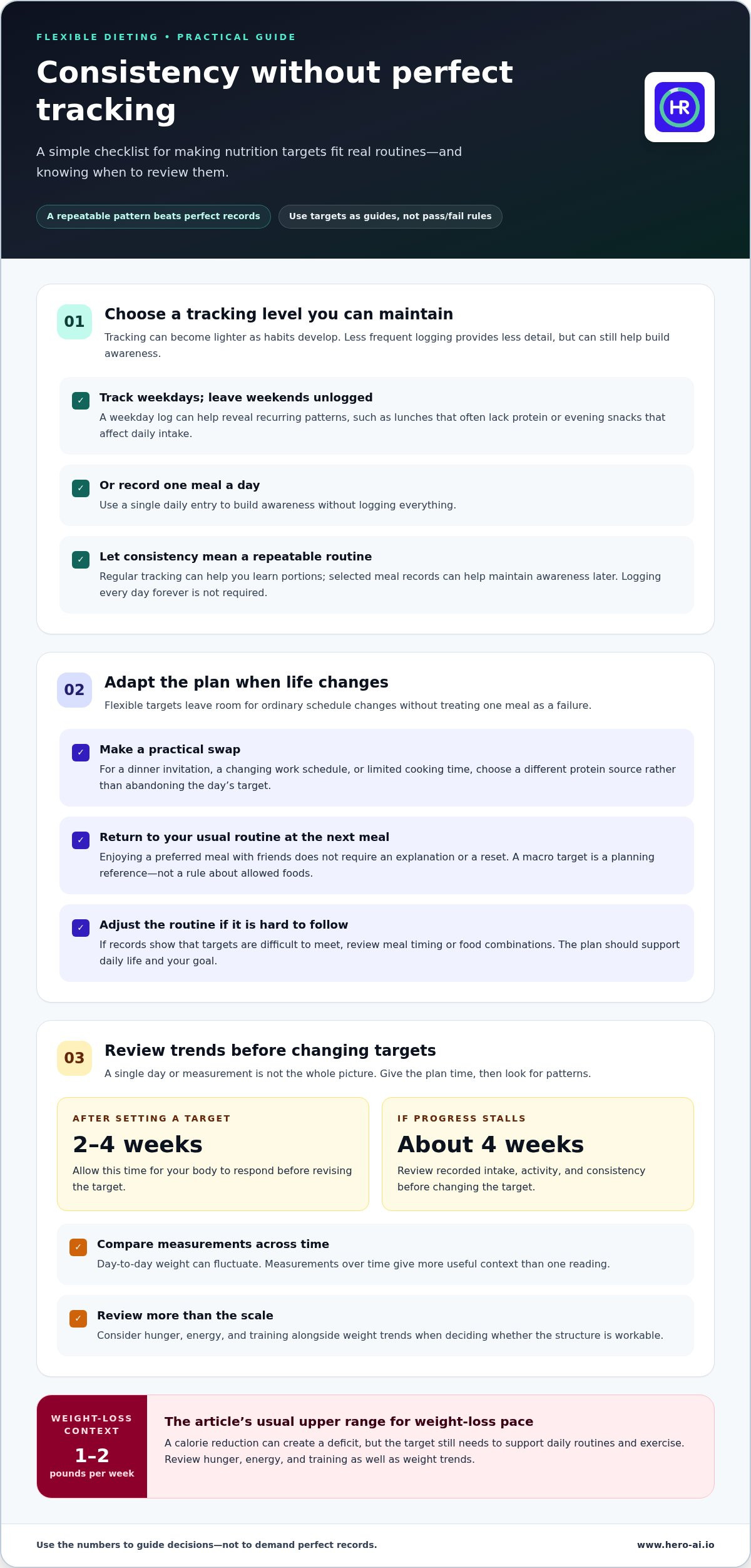
A sustainable nutrition routine needs to fit your actual lifestyle. A dinner invitation, changing work schedule, or limited cooking time can disrupt a fixed menu. Flexible targets let you adjust food choices while keeping the overall plan in view. For example, you could choose a different protein source at dinner rather than abandon the day’s target. The practical benefit is that your plan can accommodate ordinary changes without treating one meal as a failure.
Tracking frequency can change as habits develop. You might track on weekdays and leave weekends unlogged, or record one meal a day to build awareness without entering everything. These approaches offer less detail than full daily tracking, so they suit people who want a lighter routine rather than precise records. A weekday log can still reveal patterns, such as lunches that regularly lack protein or evening snacks that affect daily intake.
Numbers are useful when they guide decisions, not when they become a reason to keep adjusting. After setting a target, allow 2-4 weeks for the body to respond before revising it. If progress has stalled for about four weeks, review the recorded intake, activity, and consistency before changing the target. Weight can fluctuate from day to day, so one measurement does not describe the full trend. Comparing measurements across time gives more useful context.
For weight loss, the pace matters alongside adherence. The article’s guidance identifies 1-2 pounds per week as a usual upper range for weight loss. A planned calorie reduction can create a deficit, but the selected target still needs to support daily routines and exercise. If a target leaves little room for meals the person can maintain, the plan may be difficult to follow. Reviewing hunger, energy, and training alongside weight trends can help identify whether the structure is workable.
Flexibility also means you don’t need to explain every food choice to other people. You can enjoy a preferred meal with friends, then return to your usual routine at the next meal. There’s no need to give family, gym acquaintances, or coworkers a detailed account of your nutrition choices. A macro target is a planning reference, not a rule that decides which foods are allowed.
Consistency can mean following a repeatable pattern, not logging every day forever. You might track regularly while learning portion sizes, then record selected meals to maintain awareness. If your records show that a routine makes targets difficult to meet, adjust meal timing or food combinations. What matters is whether the approach supports daily life and your goal. A flexible system makes room for review without requiring the same numbers and schedule every day.
Setting carbohydrate, protein, and fat targets
Set targets around your goal, body weight, and activity instead of copying another person’s numbers. For muscle gain, the suggested starting ranges are 0.7-1 gram of protein per pound of body weight and 0.4-0.6 grams of fat per pound. These ranges don’t form a complete daily plan. Your calorie target, training, and food preferences also shape how much carbohydrate fits.
Protein can be a practical first target because you can divide it across meals. This illustrates how the formula works, rather than prescribing a universal target. If you eat three meals, you might spread protein across them; with a different schedule, use another pattern.
Apply the same body-weight calculation to fat. Foods such as nuts, seeds, oils, eggs, and dairy can contribute to your target. The amount helps organize a plan, but food choices still affect nutrition and how meals fit your preferences.
Carbohydrates can be adjusted around the calorie target and the selected protein and fat amounts. Carbohydrates provide 4 calories per gram, while fat provides 9 calories per gram. Protein also provides 4 calories per gram. These values help explain how changing one macro affects the energy available for the others. Training demands and meal preferences can guide the carbohydrate allocation.
A sample plan might use 1,800 calories per day, with 130 to 150 grams of protein, 130 to 160 grams of carbohydrates, and 45 to 60 grams of fat. Treat these as example targets, not universal recommendations. A person’s weight, goals, and activity can change the appropriate distribution. Tracking totals can show how a meal choice affects the remaining targets for the day.
Targets should work with your training and support a practical relationship with food. If a carbohydrate target leaves you feeling low on energy during exercise, review meal timing and your overall daily plan. If reaching your protein target is difficult, consider familiar options such as yogurt, beans, eggs, or tofu. Processed foods can fit your numbers, but macro totals don’t show fiber or micronutrients.
Make adjustments in manageable increments. A 10-gram increase in protein is one example of a small change. Record how the plan fits your meals and activity before changing other targets. This helps keep the figures useful as planning references, rather than allowing them to dictate every food choice.
Using tracking apps without pursuing perfect accuracy
A tracking app can organize food entries and compare your intake with macro targets. Its numbers are estimates, so consistent logging is more useful than correcting every small difference.
Approximate App-Based Tracking
Approximate tracking means logging reasonable estimates instead of trying to measure every ingredient with perfect precision. Almost impossible to track macronutrients with 100% precision, so a few grams over or under is acceptable. Being within 100-150 calories of a calorie target is close enough for most people to see results. Weekly average intake matters more than any single day’s total.
Use the same method for familiar foods. If a meal entry shows 342 calories in one app and 355 calories in another, don’t re-log the meal solely to resolve that difference. Log the portion you ate and move on. If you’re trying to lose weight, look at patterns across the week rather than interpreting one day as success or failure.
A useful routine starts with entries that are easy to repeat. Save a common breakfast, record a regular lunch, and estimate less familiar meals. Meeting goals 80% of the time is usually enough to see results. That gives the app a practical function: it shows whether your choices generally align with your target, without turning every meal into a precision task.
Tool Features for Meal Tracking
Meal-tracking tools can make food entry and recipe organization easier. When choosing an app, compare practical features such as barcode scanning, recipe import, and meal planning. Barcode scanning can speed up packaged-food entry, while recipe import and meal planning can help organize meals you prepare at home.
Which macro tracking apps have free plans, and what features are included? Free-plan features vary by app; review whether the plan includes food logging, macro totals, barcode scanning, saved recipes, or meal planning. Start with the features you’ll use regularly. For example, someone who mostly cooks from saved recipes may value recipe entry more than a barcode function.
Consider how easily you can find and edit routine entries. A useful interface lets you review daily totals and adjust a portion without rebuilding the entire meal. If your activity level changes, the ability to update targets may matter. These features support the tracking process, but they don’t make estimated food entries exact.
Estimating Restaurant Meals and Portions
Restaurant tracking means recording a reasonable estimate of the meal you ate, including its main components. Restaurant meals often combine ingredients that are difficult to measure separately. Start with a menu nutrition estimate when available. Otherwise, choose the closest app entry and adjust it to reflect the portion you actually ate.
Separate the meal into visible parts. For example, log the main protein, side dish, sauce, and dressing separately when the app allows it. If you share a meal, estimate your portion rather than logging the full dish. Include extras such as a drink or condiment if you had them.
Use a consistent estimate for similar meals. Apply the same portion reference the next time you order that dish, then compare weekly averages rather than trying to reconstruct every ingredient. This helps you stay aware of restaurant meals while recognizing that an app entry is still an estimate. The aim is to log the meal well enough to guide future choices.
What are the best macro tracking tools and apps for flexible dieting?
Choose the option that makes your targets and food records clear enough to guide everyday decisions. An app’s name alone doesn’t determine whether it suits you; your tracking habits, preferred level of detail, and need for useful summaries matter more.
Start by identifying what you want a tool to do. A basic food log may suit you if you only want to record meals and review daily totals. A macro-focused app can help when you need to compare protein, carbohydrates, and fat with separate targets. A spreadsheet is another option if you prefer to enter foods manually and review totals yourself.
Choose a format you can use consistently. If you eat similar breakfasts, quick access to saved entries may be useful. If your routine varies, look for clear search and editing tools. If you often eat away from home, consider how easily you can create custom entries. The right interface reduces friction in the situations that tend to disrupt your logging.
Review how an app presents your progress. A useful summary makes it easy to see food entries and macro totals together, rather than hiding them on separate screens. Check whether it answers practical questions: Did you reach your protein target? Which meals account for most of the day’s intake? Can you spot patterns without treating one day as decisive?
Food data quality matters, too. Databases may contain duplicate entries or different serving descriptions. When practical, compare an entry with the package label or recipe, then choose the closest reasonable match. For a homemade meal, saving the recipe creates a repeatable record. For an unfamiliar dish, a sensible estimate may be more useful than spending too long searching.
Before settling on a tool, try it with a typical day. Log a familiar meal, adjust a portion, and review the totals. Then record a different meal that reflects your usual activity and schedule. Notice whether the process is clear or requires frequent corrections. A tool that fits your routine is more useful than one with extra functions you rarely use.
Privacy and access are practical considerations, too. Review what account details the app requests and whether your records are accessible in your usual settings. If you switch between devices, check that your entries are available where you need them. These details affect how convenient your tracking routine is across work, training, and home.
There is no single best app for every flexible dieting approach. Select a tool that presents the information you use, supports your preferred logging style, and keeps daily review manageable. Explore a structured option if you want a defined way to continue your nutrition planning.
Hero AI: 1 year subscription
Hero AI offers a 1 year subscription. It may suit readers who have reviewed their tracking needs and want to consider a subscription option as they build a consistent nutrition routine. First, identify what you need from a tracking tool, such as clearer organization or a regular review process. Consider those needs when deciding whether Hero AI is relevant to your approach. A subscription alone doesn’t set macro targets or determine food choices. Flexible dieting still depends on personal targets and daily decisions. The subscription is an access option, not a nutrition rule or a promise of a specific result. For information about Hero AI, visit the Hero AI website.
Make Your Next Tracking Choice Practical
Choose a tracking routine you can keep using. Start with the information that helps you make decisions, then remove steps that add effort without changing those decisions. A flexible dieting macro tracking tool should support your routine, not become the routine itself. Use your records to spot patterns and decide what to adjust, rather than treating every entry as a score.
Set a review point that suits your schedule. Consider whether your logging method works for meals at home, restaurant choices, and changes in activity. If it feels burdensome, simplify the process before giving it up. A useful system leaves room for ordinary life while keeping your nutrition goals in view.
Hero AI offers a 1 year subscription for readers considering a structured next step. Contact Hero AI to get started and explore whether it fits your approach. Choose a method that supports consistent decisions, then build from there.
Frequently Asked Questions
How do I start Tracking Macros?
Start with a clear goal and a method for recording meals. Use package labels for packaged foods, and keep raw or cooked weights consistent when logging ingredients. For a familiar meal, save the recipe with ingredient amounts so future entries use the same basis. Review totals after a typical day and identify which meals are easiest to record. Adjust the process before adding more detail.
How often should I adjust my macros goals?
Wait 2-4 weeks before adjusting macro goals, so you can assess a sustained pattern rather than a short-term change. If progress has stalled for about four weeks, review your records, activity, and consistency first. For example, missed entries or changing portion estimates can make a target appear ineffective. Change one element at a time, then observe whether the adjustment better fits your goal and routine.
So… Is It Just Counting Calories With Extra Steps?
No. Calorie tracking measures total energy, while macro tracking also separates protein, carbohydrates, and fat. That distinction can help explain why two meals with similar calories support different nutrition priorities. For example, someone preparing for strength training may compare protein and carbohydrate intake, not just a meal’s energy total. Macros add detail to calorie awareness, but don’t assess every factor, such as micronutrients or food quality.
What Are Macros, Anyway?
Macros are the three macronutrients: protein, carbohydrates, and fat. They supply energy and contribute differently to daily nutrition. Protein provides 4 calories per gram, carbohydrates provide 4 calories per gram, and fat provides 9 calories per gram. For example, a food label’s grams of fat contribute more calories than the same grams of protein. Tracking these nutrients shows how a day’s energy intake is distributed.
What is flexible dieting and macro tracking?
Flexible dieting means using daily nutrition targets while allowing different foods to fit them. Macro tracking records protein, carbohydrates, and fat to show how food choices relate to your plan. A flexible dieting macro tracking tool can make those totals easier to review. For example, you can choose between two lunches based on preference, then see which better fits your remaining daily targets.
How do you calculate daily calorie and macro targets?
Estimate resting energy needs using weight, height, age, and the equation’s adjustment, then multiply by an activity factor to estimate daily energy needs. For example, the Mifflin-St Jeor equation uses weight in kilograms, height in centimeters, and age. Set calories around your goal, establish protein and fat targets, then allocate the remaining calories to carbohydrates. Training, daily movement, and weight trends can guide later adjustments.
How accurate are macro tracking apps and food databases?
App totals are estimates, not exact measurements. Database entries can differ because foods, brands, and serving descriptions vary. Compare packaged-food entries with the nutrition label, and use consistent portions for repeat meals. Restaurant dishes often require estimating ingredients and serving sizes. A small mismatch should not prompt repeated logging: an entry of 342 calories versus 355 calories differs by 13 calories, which rarely changes the overall pattern meaningfully.
How do macro tracking app costs vary around the world?
Subscription costs and plan options vary by app and market. The amount may depend on billing period, included features, and payment currency. Before subscribing, compare the plan details shown for your account, including renewal and cancellation terms. Check whether the app’s logging and meal-planning features fit your routine. Comparing included functions can be more useful than comparing headline prices alone.


