

You can track your own vegan recipes by entering ingredients or importing a recipe. A vegan protein macro counter app can then show the protein and other macros in your meal alongside your daily targets. Recipe tools vary between apps.
This matters when a meal combines ingredients in portions that don’t match standard database entries. Recipe tracking is only one part of choosing an app. Consider how it handles daily targets, essential amino acids, free features, and subscription terms.
This guide explains what to look for: how to log custom recipes, fit meal targets into daily tracking, and interpret amino acid coverage tools. It also covers free features and subscription terms, so you can judge whether an app’s tracking approach suits your routine.
Key Takeaways
- Learn what to look for when adding personal vegan recipes, including ingredient entry and recipe-import options.
- Use meal targets to plan daily protein intake and compare protein sources alongside their other macros.
- Understand how amino acid coverage tools assess whether meals include all nine essential amino acids.
- Compare free and premium tracking features, then review subscription terms before choosing an app.
- Identify which app features best match your preferred meal-logging and daily tracking routine.
Applying protein targets in daily meals
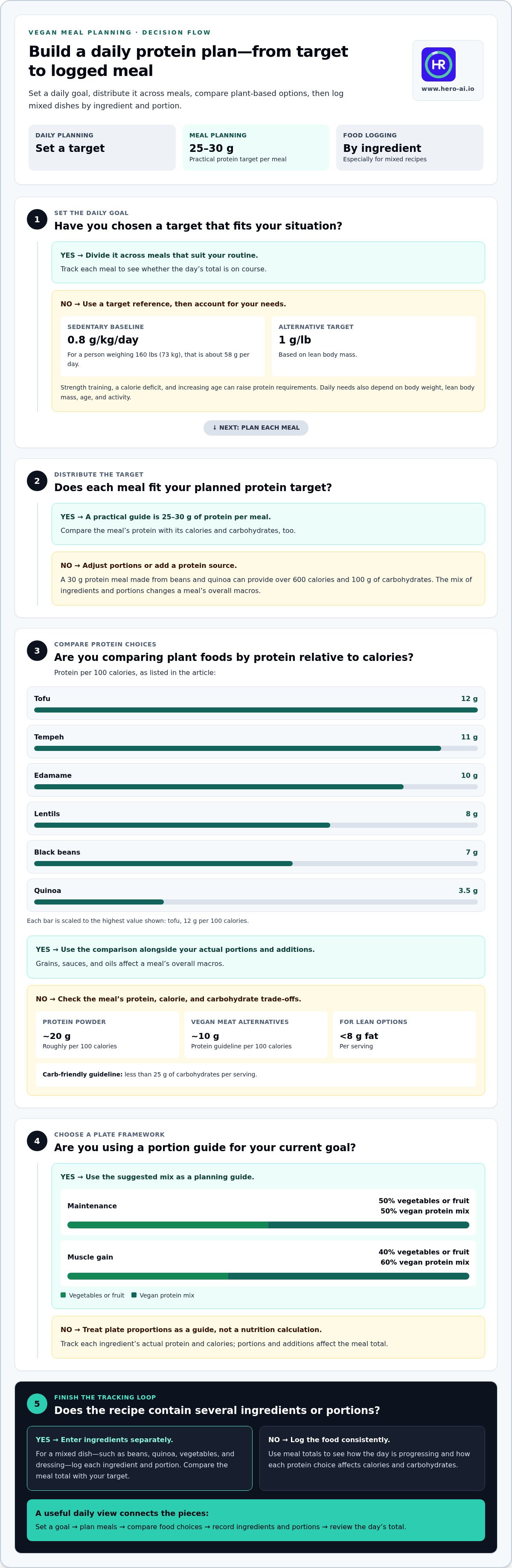
Daily protein needs depend on body weight, lean body mass, age, and activity. A baseline for sedentary people is 0.8 grams per kilogram of body weight per day. For a person weighing 160 lbs (73 kg), that calculates to about 58 grams per day. Strength training, a calorie deficit, and increasing age can raise protein requirements. Another target uses 1 gram per pound of lean body mass.
To apply a target, set a daily amount, then divide it across meals that suit your routine. A practical meal target is 25 to 30 grams of protein, regardless of whether meals include meat. Tracking each meal helps show whether the day’s total is on course. It also reveals how a protein choice affects calories and carbohydrates.
Compare plant foods by protein relative to calories. Tofu provides 12 grams per 100 calories, while tempeh provides 11 grams. Edamame provides 10 grams, lentils 8 grams, black beans 7 grams, and quinoa 3.5 grams per 100 calories. These figures help compare ingredients, but a meal’s overall macros depend on portions and additions such as grains, sauces, or oils.
That difference can affect meal planning. Getting 30 grams of protein from beans and quinoa can provide over 600 calories and 100 grams of carbohydrates. Plant-based protein powder provides roughly 20 grams of protein for about 100 calories. Vegan meat alternatives can be compared using a guideline of about 10 grams of protein for every 100 calories. For lean options, look for less than 8 grams of fat per serving; carb-friendly options have less than 25 grams of carbohydrates per serving.
A plate framework can help translate the target into portions. For maintenance, one suggested mix is 50% vegetables or fruit and 50% vegan protein mix. For muscle gain, the suggested mix is 40% vegetables or fruit and 60% vegan protein mix. These proportions are a planning guide, not a substitute for tracking each ingredient’s actual protein and calories.
Log portions consistently, especially for mixed dishes. When a recipe combines beans, quinoa, vegetables, and dressing, enter the ingredients separately. Compare the meal total with your target, then adjust portions or add a protein source if needed. This gives you more useful daily tracking than logging only the dish name.
Free and premium app features
Macro tracking apps with editable nutrition goals let users set protein and calorie targets. Compare the goal-setting and food-logging features included in free and paid plans.
Setting Protein and Calorie Goals
Goal settings determine whether an app can reflect your approach to eating. Look for separate protein and calorie fields and a clear display of progress as you log meals. If the app calculates a target based on body weight, check whether you can edit it. Someone following a protein-focused plan, for example, may need different settings from someone focused on calories.
Check how the app displays each target during the day. A clear interface shows your logged intake beside your goal, rather than hiding totals in a separate report. See whether it distinguishes daily targets from individual meal entries. That makes it easier to understand an incomplete day without confusing food already logged with what remains.
Free and Premium Tracking Features
Free and paid plans vary, so compare features rather than relying on the plan label. Check whether the free option includes food logging, macro totals, and ingredients for meals you eat often. Paid features may add useful tools, but their value depends on whether they solve a real task in your routine.
Try an example meal. If lunch includes lentils, vegetables, and dressing, see whether the free plan lets you log each ingredient and review its macro contribution. Then consider whether a paid plan adds a feature you would use, such as a more flexible report or a saved-meal workflow. Don’t pay for tools that won’t change how you track.
Compare plans with a short feature audit:
- Record a typical meal and see how the app handles ingredients.
- Review whether protein and calorie totals appear alongside logged eating.
- Check whether saved meals remain accessible across tracking sessions.
- Identify which extra features require a premium plan.
Check the app’s weight-related settings, too. Some use body weight to suggest a target; others let you enter one directly. Find out which approach the app uses and whether you can edit the target. This matters if your plan is based on lean body mass rather than total weight.
Finally, check whether the app supports the way you record food. Manual ingredient entry suits meals made at home, while scanning or importing recipes can reduce repeated entry when available. Try your usual foods and recipes before comparing plans. Choose the option that records what you eat and shows the totals you need without unnecessary steps.
Essential amino acid coverage
Protein totals and amino acid coverage describe different aspects of a meal plan. The body cannot produce nine essential amino acids, so they must come from food. A protein counter can show total protein, while an essential amino acid, or EAA, confidence meter assesses coverage of all nine. That distinction helps you interpret what a tracking result does and doesn’t indicate.
An EAA meter can help you check amino acid coverage, but it doesn’t replace reviewing your meals. A total protein figure alone doesn’t show whether your logged foods provide all nine essential amino acids. If an app gives a confidence score, find out whether it applies to a whole day or one meal. That context affects how to use the result when adjusting a meal plan.
Use a consistent review process when logging food:
- Record the ingredients and portions in each meal.
- Review the day’s protein total separately from any EAA coverage indicator.
- Check whether the indicator applies to one meal or the full day.
- Use the result to identify meals that need closer attention.
For example, a meal plan may include different protein sources at breakfast, lunch, and dinner. Reviewing each entry alongside the daily summary can show how the app evaluates coverage. Don’t assume that a high protein total means the app has assessed every EAA. The app should clearly explain what its feature measures.
Before downloading an app, see how it explains its amino acid feature. Look for a clear description of its assessment of the nine essential amino acids, where the indicator appears, and whether the result is based on logged foods. If the app shows only protein grams, that can still help with macro tracking, but it isn’t an EAA coverage assessment.
Food logging quality affects how useful the result is. When you enter a recipe as a generic dish, the app may have less detail to assess than when you log the ingredients separately. For mixed meals, enter the main ingredients individually if the app supports it. Then compare the meal view with the daily coverage summary.
Use the meter alongside meal records and protein totals. A clear display should show whether the app assesses coverage across all nine essential amino acids, rather than suggesting that one number captures every nutrition detail. This keeps amino acid tracking distinct from calories, protein grams, and other macros.
Vegan app prices and subscriptions
Subscription terms determine the cost and access to tracking features. Compare the billing period, trial conditions, renewal process, and cancellation deadline before choosing a plan. For plant-based foods, check whether the app identifies verified entries and explains how they are verified. A large database alone doesn’t show whether foods have been checked for plant-based suitability.
Which vegan macro counter apps have verified plant-based food databases? Look for apps that explain how entries are verified and identify plant-based foods in their database. Check that an entry matches the specific product or ingredient you’re logging, rather than assuming every result is suitable.
Subscription structures differ. An annual plan may include a 3-day free trial when available, and one yearly subscription is described as offering 30% savings. Compare the renewal period and the features included across the full term. A trial is useful for testing recipe entry, food search, and daily nutrition summaries before committing.
Read the renewal and cancellation terms before activating a trial or paid plan. Subscribers must cancel at least 24 hours before the current subscription period ends to avoid automatic renewal. Set a reminder that allows time to review the account settings and complete cancellation before that deadline. Keep the confirmation for your records.
Review privacy as carefully as billing. A nutrition app may store meal logs, ingredient choices, and account details. Before creating an account, read its privacy information to understand what data it collects, how it uses that data, and what account controls are available. Avoid entering information you don’t need for your tracking routine.
Use a short comparison checklist when evaluating two subscriptions:
- Confirm whether the food database identifies verified plant-based entries.
- Review which recipe, logging, and nutrition features are included.
- Note the trial duration and the subscription period that follows.
- Check the renewal date, cancellation method, and 24-hour deadline.
- Read the privacy terms and account data controls.
If you mainly log meals and review protein totals, prioritise those functions over tools you won’t use. If you rely on imported recipes, try that workflow during a trial. Compare the renewal terms with your expected use, then decide whether the subscription will help you track consistently.
Don’t treat a trial as a test you can forget about. Note its end date and the cancellation deadline when you start, then review your subscription status after making any changes. This helps you manage renewal and distinguish your nutrition records from assumptions about an app’s database or privacy settings.
What are the best macro tracking apps for vegans?
The right app depends on how you log meals, review nutrition, and manage targets. Compare options using the same vegan meal and routine, rather than relying on rankings alone. For example, see whether an app records a homemade lentil bowl as separate ingredients or one generic entry. This shows how much control you have over the details.
Start by checking food coverage. Search for the plant-based ingredients and packaged foods you eat regularly. Confirm that each result matches the item and serving you intend to log. A similar name doesn’t guarantee that an entry represents the same product or recipe. Accurate food details make comparisons and daily records more useful.
Next, test the logging workflow. Enter a meal manually, scan a barcode if the app supports it, and add a recipe if available. Check whether editing ingredient portions updates the meal totals. An app that fits how you normally prepare food may be easier to use consistently than one that adds steps to every meal.
- Food search: Test familiar ingredients and verify that results match the foods you eat.
- Recipe handling: Check whether you can save, edit, or import a typical home-cooked meal.
- Macro display: Review how protein, calories, and other nutrition totals appear after logging.
- Goal controls: See whether the app supports your preferred way of setting daily targets.
- Plan limits: Compare which tracking tools are available without a subscription.
For a practical comparison, record the same meal in each app you’re considering. Use a recipe with several components, such as tofu, vegetables, and sauce. Note how many steps logging takes, whether you can edit portions, and whether the totals are easy to understand. This helps distinguish useful functions from features that don’t fit your routine.
Consider how you review your records, too. You may want a quick daily summary, meal-by-meal detail, or saved recipes. Decide which view you’ll use most, then check how easy it is to find. Review subscription terms separately so feature comparisons don’t distract from renewal or cancellation conditions.
No single app is best for every vegan. Match the food database, logging method, target controls, and plan features to your actual needs. To explore photo-based meal tracking and recipe import, review meal-tracking features.
Hero AI: 1 year subscription
Hero AI is an AI-powered health and fitness platform for calorie and macro tracking. Log meals with photo recognition, scan a barcode, or import recipes from TikTok and Instagram. Its food database contains over 3 million verified foods. These options provide different ways to record meals, from photographed dishes to barcode-scanned items and social media recipes. Hero AI offers a 1 year subscription. It is a relevant option if you want these meal-logging methods in one platform. Visit Hero AI’s website to explore the platform.
Set up a tracking routine that fits your meals
Test your usual routine before making an app part of your day. Choose meals you already eat, log them consistently, and check whether the entries reflect your portions. Trying your routine over several meals can show whether tracking feels manageable beyond a single example.
A vegan protein macro counter app should fit the way you enter food and review nutrition. Focus on practical details: how you log meals, how clearly you can interpret results, and whether the tools suit your habits. Adjust your approach as your meals change rather than treating one setup as permanent.
If photo recognition, barcode scanning, or recipe import suits your preferred workflow, explore Hero AI’s meal-tracking platform. Choose an approach you can use consistently, and build your daily tracking routine around it.
Frequently Asked Questions
Can I add my own vegan recipes?
Recipe entry depends on the app’s tools. If it supports custom recipes, enter each ingredient and its quantity, then save the combined dish for future logs. For example, you could record a homemade stew as beans, vegetables, broth, and seasonings. Without recipe saving, you may need to enter the ingredients again each time you eat it.
Does the app track protein for vegans?
Yes. A nutrition tracker can show protein totals for logged vegan foods when its database has a suitable match. A vegan protein macro counter app is most useful when you can choose the right product and serving size. For packaged tofu or plant-based yogurt, match the brand and label details when available. This helps avoid misrepresenting your portion with a generic entry.
Is this app suitable for vegan weight loss?
A tracking app can help you log meals and review calorie and protein intake while pursuing weight loss. Use it to notice patterns, such as snacks you often miss or meals that leave you hungry. The app records information; it doesn’t determine which eating plan suits your health needs. Keep entries consistent and adjust your approach to your own goals and circumstances.
Why not just use a macro tracker?
A general macro tracker may be enough if you need only protein, carbohydrate, fat, and calorie totals. A vegan-focused option may suit you better if you need plant-based food searches, recipe tools, or amino acid information. Compare actual entries for foods you buy and cook. What matters is whether the app supports your tracking tasks, not whether its name includes “vegan.”
How accurately do nutrition apps track protein in vegan foods?
Protein estimates depend on the food entry, serving size, and recipe details you select. Logging a dry ingredient as cooked, for example, can produce a misleading result because the entries refer to different forms. Packaged-food labels can help you match a product’s stated nutrition. For mixed dishes, log components separately when possible and adjust quantities to reflect what you ate.
How much do vegan-friendly macro tracking apps cost?
Costs vary by app, subscription length, and included features, so there’s no single price for vegan-friendly tracking apps. Compare the plan amount, billing period, and renewal terms. A trial, when offered, may let you test logging features before a subscription begins. Read the plan details to understand recurring billing.
Which vegan macro apps are free and what features do they include?
Free access and included tools vary by app. Some plans may limit saved meals, reports, database access, or goal settings; others may include selected features without a subscription. Test a typical food search and log a full meal before choosing. Check whether the features you rely on are available without payment or require a paid plan.
Do vegan protein tracking apps include amino acid profiles and protein quality?
Some apps provide amino acid information, but macro tracking alone doesn’t establish protein quality. An EAA indicator may assess coverage of all nine essential amino acids, while a protein total shows grams consumed. Check what the indicator measures and whether it applies to a meal or a full day. Treat these as separate data points when reviewing your food records.


