

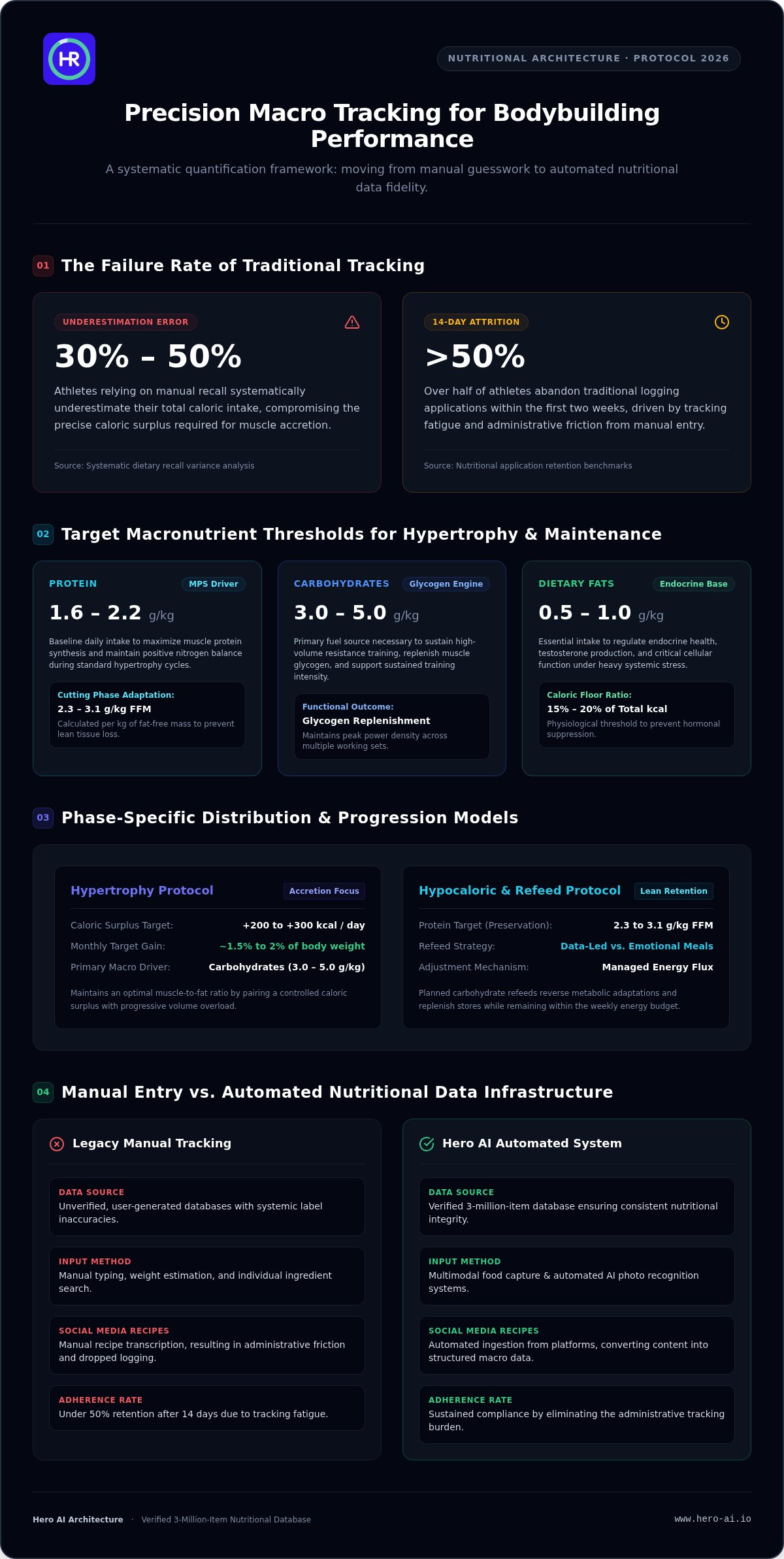
Athletes relying on manual recall systematically underestimate their total caloric intake by 30% to 50%. This margin of error often negates the precise caloric surpluses required for quality muscle accretion. Effective macro tracking for bodybuilders in 2026 requires a shift from manual estimation to automated precision. Traditional methods are time-consuming. They're frequently inaccurate due to unreliable nutritional labels. Manual data entry and the tracking of complex recipes from social media create significant administrative friction for the modern athlete.
This guide provides a systematic protocol for managing macronutrients to optimize muscle hypertrophy and fat loss using automated data systems. It's designed to eliminate the guesswork inherent in traditional dieting. You'll learn how to implement automated nutritional logging and establish precise macro distributions for hypertrophy. The technical framework detailed here ensures the seamless integration of social media recipes into your daily data set. We examine the transition to multimodal food capture and the use of verified databases to maintain dietary accuracy across all phases of training.
Key Takeaways
- Understand the technical relationship between precise macronutrient distribution and muscle protein synthesis.
- Define specific protein and carbohydrate thresholds required to sustain high-volume resistance training.
- Compare the efficiency of manual data entry against automated AI photo recognition systems.
- Deploy a systematic protocol for macro tracking for bodybuilders using the Hero AI verified 3-million-item database.
- Automate recipe ingestion from social media platforms to maintain nutritional data integrity.
The Role of Macronutrient Tracking in Bodybuilding Performance
Macro tracking for bodybuilders is the systematic quantification of protein, carbohydrate, and fat intake to control body composition. It's an administrative process that ensures nutritional inputs align with physiological requirements. This method moves beyond simple caloric counting by focusing on the specific metabolic roles of each macronutrient. Precise tracking allows for the adjustment of variables to meet specific training goals, such as increasing lean mass or reducing body fat percentage.
Protein provides the essential amino acids necessary for muscle protein synthesis. Research indicates that a daily intake of 1.6 to 2.2 g per kilogram of body weight is required to maximize the mechanisms of muscle hypertrophy. Without precise tracking, athletes risk inadequate nitrogen balance. This impairs recovery and prevents optimal tissue growth. Carbohydrates function as the primary fuel source for high-volume resistance training. Maintaining muscle glycogen stores requires an intake of 3.0 to 5.0 g per kilogram of body weight. Dietary fats regulate endocrine function and testosterone levels. A minimum threshold of 15% to 20% of total daily caloric intake is necessary to sustain hormonal health during intensive training cycles.
Energy Balance vs. Nutrient Partitioning
Energy balance determines the direction of weight change. A caloric surplus facilitates hypertrophy, while a deficit drives fat loss. However, macronutrient ratios dictate nutrient partitioning. This process determines whether weight change occurs as lean mass or adipose tissue. Precise macro tracking for bodybuilders is a technical requirement in competitive contexts. Small variances in nutrient distribution can significantly impact stage conditioning and performance density. Ratios matter more than total calories because they influence the hormonal environment and the efficiency of tissue repair.
Logistical Challenges of Traditional Tracking
Manual tracking relies on subjective estimation. This often leads to significant data inaccuracies. Athletes using manual recall frequently underestimate their intake by 30% to 50%. Tracking fatigue is a primary cause of program failure. Industry data shows that over 50% of users abandon traditional logging applications within 14 days due to the administrative burden of manual entry. Legacy applications often utilize unverified, user-generated databases. These databases introduce errors that compromise the integrity of a bodybuilding protocol. Reliable tracking requires verified data points and automated capture systems to maintain long-term compliance and data validity.
Determining Optimal Macro Ratios for Hypertrophy and Fat Loss
Macro tracking for bodybuilders requires different ratios depending on the current metabolic phase. Protein intake remains the primary variable for muscle preservation and growth. During a hypertrophy phase, a baseline of 1.6 to 2.2 g per kilogram of body weight is the established standard. This requirement increases during a hypocaloric or cutting phase. Athletes should target 2.3 to 3.1 g per kilogram of fat-free mass to prevent lean tissue loss. Precise calculations ensure that the body has sufficient amino acids to support repair without excessive caloric intake.
Carbohydrates are adjusted to match training volume and intensity. High-volume resistance training requires 3.0 to 5.0 g per kilogram of body weight. This level of intake ensures glycogen replenishment and sustains performance density. Fat intake must not drop below physiological minimums. A threshold of 0.5 to 1.0 g per kilogram of body weight maintains baseline endocrine function and testosterone levels. Maintenance phases require a balanced approach where all three macros are kept at levels that sustain current body weight and recovery capacity.
Phase-Specific Macro Distribution Protocols
The hypertrophy protocol prioritizes a controlled caloric surplus. A surplus of 200 to 300 kcal per day optimizes the muscle-to-fat accretion ratio. This typically results in a body weight gain of approximately 1.5% to 2% per month. The fat loss protocol shifts focus to energy flux management. Protein is maintained at the higher end of the spectrum while carbohydrates and fats are reduced to create a deficit. This protects metabolic rate and lean mass.
Data-led refeeds replace emotional cheat meals. These are planned increases in carbohydrate intake designed to temporarily reverse metabolic adaptations. They replenish glycogen and improve training performance. Tracking these events ensures they remain within the weekly energy budget. Implementing an automated tracking infrastructure allows for the objective management of these variables without the risk of emotional overeating.
The Importance of Micronutrient Density
Macro tracking for bodybuilders often overlooks micronutrient density and fiber. Fiber intake is critical for digestive health and nutrient absorption. Athletes should target approximately 14 g of fiber for every 1,000 calories consumed. Technical methods for ensuring nutrient diversity include tracking variety scores for vegetables and fruits. This prevents micronutrient deficiencies that can impair recovery and immune function.
Holistic health monitoring involves tracking more than just the three primary macros. A sophisticated macro tracking app facilitates the logging of fiber and micronutrients alongside traditional data points. This ensures the diet supports long-term physiological health. Automated systems reduce the friction of tracking these additional data points. They provide a comprehensive view of the nutritional profile. This allows athletes to focus on training while the software manages the administrative burden of data collection.
Comparison of Manual Entry vs. Automated Data Capture Systems
Efficiency in data collection is a primary determinant of long-term dietary compliance. Manual entry requires an average of 15 to 30 minutes of daily administrative interaction. In contrast, automated AI capture reduces this requirement to under 30 seconds per meal. For athletes, this reduction in friction is essential. Macro tracking for bodybuilders requires high-frequency logging over months or years. Systems that minimize the time cost of data entry increase the probability of maintaining a consistent caloric surplus or deficit.
Data integrity is frequently compromised in manual logging due to subjective estimation. Research indicates that individuals using manual recall systematically underestimate their total caloric intake by 30% to 50%. This discrepancy often stems from the use of unverified, user-generated databases in legacy applications. These databases contain conflicting entries that introduce significant margin for error. Automated systems utilize verified data sets to ensure that logged values reflect actual nutritional content. This objective approach eliminates the variance associated with human error in weight estimation.
Technical Mechanics of AI Photo Recognition
Visual recognition algorithms utilize computer vision to identify food type and volume from digital images. These systems map visual data against a verified food database to determine macronutrient profiles. This technical layer achieves a top-1 identification accuracy of 85% to 95% for common meal components. Single 2D photographic logging exhibits an inherent portion estimation error margin of 15% to 25%; however, systems utilizing depth-assisted scaling or reference-marker calibration reduce this error to approximately 5% to 10%.
AI calorie tracking is an automated process that identifies nutritional values from meal photographs by cross-referencing visual data with a 3-million-item verified database.
Eliminating the "Guesswork" in Complex Meals
Decomposing multi-ingredient restaurant meals is a significant challenge for manual tracking protocols. Traditional methods require users to guess individual ingredient weights or search for generic meal entries that rarely match the actual dish. Automated systems process visual data to identify discrete macronutrient components within composite meals. This capability removes the need for weighing ingredients in public settings and ensures that complex recipes are tracked with technical precision.
User compliance metrics highlight the limitations of manual systems. Industry data shows that 50% to 80% of users abandon manual logging applications within the first 14 days due to tracking fatigue. Automated systems mitigate this churn by reducing the administrative burden. Consistent data collection is necessary to calculate personalized metabolic rates in real time. By automating the capture process, macro tracking for bodybuilders becomes a sustainable administrative task rather than a source of psychological friction.
Implementation Protocol for Systematic Nutrition Tracking
Systematic nutrition management requires a four-step implementation protocol. Step one involves establishing baseline caloric and macronutrient targets using metric benchmarks. Athletes must define protein floors and carbohydrate requirements based on fat-free mass. Step two requires configuring a photo based nutrition tracker for daily data collection. This step centralizes all dietary inputs into a digital infrastructure. Step three is the verification of automated data. Users must compare logged values against physical satiety and gym performance. Step four involves the periodic adjustment of targets. These adjustments rely on rolling body composition trends and weekly weight averages.
Integrating Social Media Recipes into the Protocol
Importing recipes from TikTok and Instagram is essential for modern macro tracking for bodybuilders. Traditional methods require manual entry of individual ingredients from video descriptions. Automated platforms allow for direct imports via social media URLs. These systems verify nutritional claims made by influencers against a 3-million-item verified database. This process identifies discrepancies in reported data. Users can save verified recipes to a personal database for recurring use. This integration ensures that social media content doesn't degrade the accuracy of the nutritional protocol.
Daily Logging Workflow for Maximum Compliance
Standardized daily workflows increase compliance by reducing administrative friction. The Snap-and-Eat method captures meal data in real-time through photo recognition. This prevents the recall errors common in manual logging at the end of the day. Barcode scanning provides additional precision for packaged performance foods. Athletes must audit logs weekly to check for macro precision. This audit also identifies potential micronutrient gaps. Maintaining this administrative routine ensures long-term dietary success. You can establish this professional infrastructure by securing an automated tracking infrastructure for your daily protocol.
Optimizing Compliance via Hero AI Technical Integration
Hero AI functions as the primary administrative infrastructure for the nutritional protocols previously discussed. A 1 Year Subscription provides access to a centralized data management system that eliminates the manual labor of food logging. The platform utilizes a 3-million-item verified database to ensure that all inputs meet the technical standards required for competitive prep. This system acts as a predictable gatekeeper, preventing the data degradation that occurs with manual estimation or unverified entries.
Data-led fitness management offers a distinct advantage over traditional methods by providing objective oversight of metabolic trends. Macro tracking for bodybuilders is no longer a task of manual calculation but one of technical supervision. The platform's ability to cross-reference visual data with verified nutritional profiles ensures that the athlete's actual intake aligns with their theoretical targets. This level of precision is necessary to maintain the tight caloric margins required for professional body composition adjustments.
Features Designed for the Bodybuilding Use Case
Photo-based meal logging is specifically engineered for high-frequency tracking during intensive training phases. It allows for the rapid capture of data without the cognitive load of searching for individual items. The recipe import feature addresses the need for dietary variety by allowing users to pull data directly from TikTok and Instagram. This ensures that social media recipes are accurately quantified before they're integrated into the daily budget. The system also supports integrated workout scheduling. Athletes can import training routines directly from fitness content, creating a unified record of both energy expenditure and intake.
The Future of Nutritional Administration
The transition from manual entry to automated oversight represents the next phase in athletic data management. AI reduces the psychological friction that often leads to tracking fatigue and program non-compliance. By automating the administrative burden, the system allows the athlete to focus on training intensity and recovery. The software provides a stable, long-term solution for maintaining dietary accuracy across multiple seasons. To implement this professional framework, Subscribe to Hero AI to automate your nutrition protocol.
Implementing a Technical Framework for Nutritional Success
The evolution of macro tracking for bodybuilders in 2026 is defined by the transition from subjective estimation to objective, automated data capture. This guide has outlined the specific thresholds for protein, carbohydrates, and fats necessary to sustain high-volume training while preserving endocrine function. Shifting the administrative burden to a digital infrastructure ensures that these critical variables remain within the required ranges without the risk of psychological tracking fatigue.
The use of verified databases and visual recognition technology allows athletes to maintain the high level of precision needed for competitive body composition goals. This technical approach facilitates real-time metabolic adjustments based on accurate, verified nutritional inputs rather than user-generated guesswork. To establish this professional framework for your daily nutritional protocol, Access the Hero AI 1-Year Subscription for automated macro tracking. Implementing a systematic, data-driven framework provides the stability and data integrity required for consistent physiological success across all training phases.
Frequently Asked Questions
Is macro tracking for bodybuilders necessary for muscle gain?
Macro tracking for bodybuilders is the primary administrative method for ensuring nutritional inputs match hypertrophy requirements. It provides a technical framework that moves beyond the variability of intuitive eating. By quantifying intake, athletes can ensure they hit critical nutrient floors consistently. This precision is necessary to drive predictable body composition changes and maintain the specific nitrogen balance required for tissue growth.
How accurate is AI photo recognition for tracking bodybuilding macros?
AI photo recognition provides a high level of precision compared to subjective manual recall. It utilizes computer vision to identify meal components and map them against established nutritional profiles. This technical layer minimizes the systematic errors associated with human weight estimation. For athletes requiring specific data integrity, this method offers a stable and efficient way to maintain a detailed record of energy and macronutrient intake.
Can I import recipes from TikTok and Instagram into a macro tracker?
Users can import recipes from social media platforms directly into the Hero AI interface. The system parses the URL data to identify discrete ingredients and their corresponding nutritional values. This automation removes the need for manual data entry from video descriptions or influencer posts. It allows for dietary variety without the risk of administrative errors that typically occur when translating social media content into a tracking protocol.
What is the best macro ratio for a bodybuilding cutting phase?
The optimal ratio for a cutting phase prioritizes lean mass preservation through elevated protein intake. Fat intake is managed to meet the minimum physiological floors required for hormonal support. Carbohydrates are then adjusted to create the necessary energy deficit while sustaining training density. Precise macro tracking for bodybuilders ensures these ratios are maintained daily, preventing the metabolic adaptations that often occur during unmonitored caloric restriction.
Do I still need to weigh my food if I use an AI calorie counter?
While AI systems significantly reduce the need for manual weighing, a hybrid approach is often utilized for maximum precision. Photo recognition effectively manages low-density items like fiber sources and complex meals. However, high-density items like oils and fats may still require scale verification to ensure exactness. This professional model balances tracking efficiency with the technical requirements of an elite-level bodybuilding diet.
How does a verified food database improve tracking accuracy for bodybuilders?
A verified food database ensures that logged data points are accurate and standardized. Hero AI utilizes a database of 3 million verified items to eliminate the conflicting data found in user-generated libraries. This infrastructure provides a reliable foundation for calculating rolling metabolic rates and making informed dietary adjustments. For bodybuilders, this level of data integrity is essential for maintaining the precise caloric margins needed for success.
What are the benefits of a 1-year subscription for fitness tracking software?
A 1 Year Subscription establishes a stable, long-term administrative infrastructure for fitness oversight. It ensures continuity of data across multiple training seasons, allowing for the analysis of year-over-year progress. This model provides full access to automated capture tools and verified data sets. Maintaining a consistent tracking platform reduces the cognitive friction of long-term dieting and supports the technical management of body composition goals.
Can I track my workouts and macros in the same application?
The platform supports the unified tracking of both nutritional data and training schedules. Users can import workout routines from social media content directly into the application. This integration ensures that nutritional protocols, such as carbohydrate cycling, are perfectly aligned with training intensity and recovery demands. Consolidating these variables into a single administrative tool streamlines the oversight of a comprehensive bodybuilding program.


